



What's Happening?
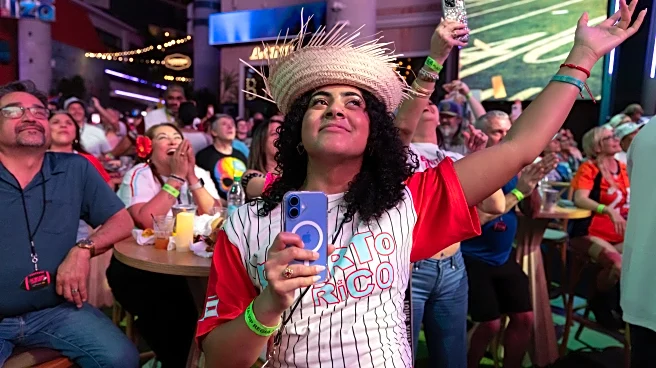
Bad Bunny, the Puerto Rican superstar, delivered a memorable halftime performance at Super Bowl LX, showcasing his cultural roots and musical prowess. The performance was marked by a blend of vibrant visuals and a celebration of Puerto Rican culture, featuring scenes of a sugar cane field and a lively La Casita set. The show included appearances by celebrities like Cardi B and musical guests Lady Gaga and Ricky Martin. Bad Bunny's setlist highlighted his hit songs and deep cuts, emphasizing his connection to Puerto Rico. The performance was not only a musical showcase but also a statement of cultural pride, with Bad Bunny waving the Puerto Rican flag and delivering a message of unity across the Americas.
Why It's Important?
Bad Bunny's performance at the Super Bowl
is significant as it represents a milestone for Latin artists on a global stage. His presence as a Spanish-language artist at such a high-profile event underscores the growing influence of Latin music in the U.S. and worldwide. The performance also served as a cultural statement, highlighting issues of immigration and identity, resonating with many in the Latinx community. By celebrating his heritage, Bad Bunny reinforced the importance of representation and diversity in mainstream media, potentially influencing future Super Bowl performances and the broader music industry.
What's Next?
Following this performance, Bad Bunny's influence in the music industry is likely to grow, potentially leading to more opportunities for Latin artists in mainstream American events. The performance may also spark discussions about cultural representation in entertainment, encouraging other artists to embrace and showcase their cultural identities. Additionally, the positive reception could lead to increased collaborations between Latin and non-Latin artists, further blending musical genres and expanding audiences.
Beyond the Headlines
Bad Bunny's performance goes beyond entertainment, touching on themes of cultural pride and political identity. His decision to highlight Puerto Rican culture and address issues of immigration and unity reflects a broader trend of artists using their platforms for social commentary. This approach may inspire other artists to incorporate similar themes in their work, contributing to a more socially conscious entertainment industry. The performance also highlights the potential for music to bridge cultural divides and foster a sense of community among diverse audiences.