
What's Happening?
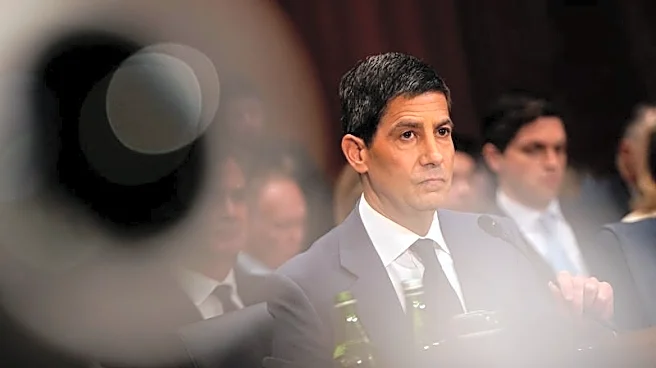
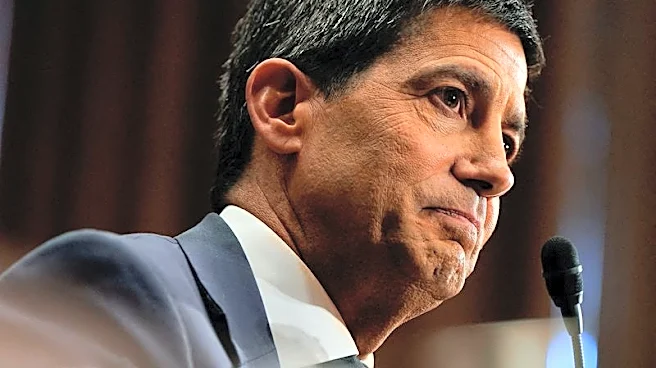
Kansas City Federal Reserve President Jeffrey Schmid has identified inflation as the most pressing risk to the U.S. economy, despite its demonstrated resilience against various challenges. In a speech
at a banking industry conference hosted by the Kansas City Fed, Schmid highlighted that while inflation has decreased from its peak, it remains too high according to business leaders in the Tenth District. The U.S. economy has shown positive growth, with GDP increasing due to strong business investments, particularly in technology and artificial intelligence, and robust consumer spending. Schmid noted that the labor market remains stable, with low unemployment rates, although it operates in a unique low-hire/low-fire environment. Despite geopolitical uncertainties and rising oil prices, which have increased costs for businesses and reduced household spending power, the economic fundamentals in the U.S. remain sound.
Why It's Important?
The emphasis on inflation as a significant risk underscores the ongoing challenges the Federal Reserve faces in balancing economic growth with price stability. Persistent inflation can erode consumer purchasing power and increase costs for businesses, potentially slowing economic growth. Schmid's remarks suggest a continued focus on controlling inflation, which may influence future monetary policy decisions, including interest rate adjustments. The resilience of the U.S. economy, despite global uncertainties and energy price fluctuations, highlights its robust fundamentals. However, the potential for inflation to widen beyond energy costs could pose broader economic challenges, affecting various sectors and consumer confidence.
What's Next?
While Schmid did not comment on the outlook for interest rates, his focus on inflation suggests that the Federal Reserve may maintain a cautious approach to rate cuts until inflation aligns with the target. The ongoing geopolitical tensions and their impact on global energy prices will likely continue to influence economic conditions. Businesses and consumers may need to adapt to potential cost increases, while policymakers will monitor inflation trends closely to adjust strategies accordingly. The Federal Reserve's future actions will be critical in managing inflationary pressures and supporting sustained economic growth.