







What's Happening?
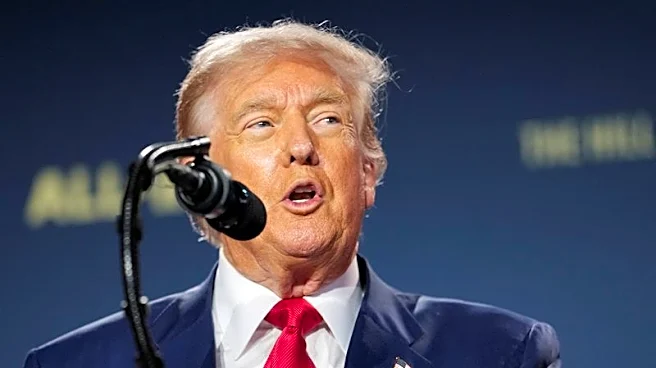
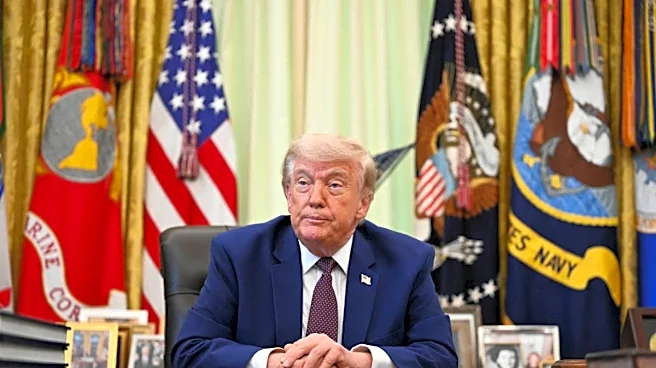
President Trump announced ongoing negotiations with artificial intelligence companies to ensure that the American public benefits from AI advancements. Reports indicate that the administration is considering acquiring a state stake in OpenAI, a leading
AI company. This move aligns with OpenAI's proposal to create a 'Public Wealth Fund,' which would distribute revenues directly to citizens, allowing them to benefit from AI growth. The idea has garnered bipartisan interest, with figures like Senator Bernie Sanders suggesting a one-time tax on AI companies to ensure widespread benefits. However, the proposal has faced criticism, with concerns about potential government overreach and corporate-government mergers.
Why It's Important?
The potential state investment in OpenAI represents a significant shift in how the U.S. government might engage with the tech industry, particularly in the rapidly growing field of artificial intelligence. By taking a stake in AI companies, the government could directly influence the distribution of AI-generated wealth, potentially reducing economic inequality. This move could set a precedent for future government involvement in other high-growth industries. However, it also raises concerns about the balance of power between the government and private sector, and the implications for innovation and competition.
What's Next?
If the Trump administration proceeds with acquiring a stake in OpenAI, it could lead to further discussions on how to implement the 'Public Wealth Fund' and manage the distribution of AI revenues. Stakeholders, including lawmakers, tech companies, and the public, will likely engage in debates over the ethical and economic implications of such a move. The outcome could influence future policy decisions regarding government involvement in private industries.