






What's Happening?
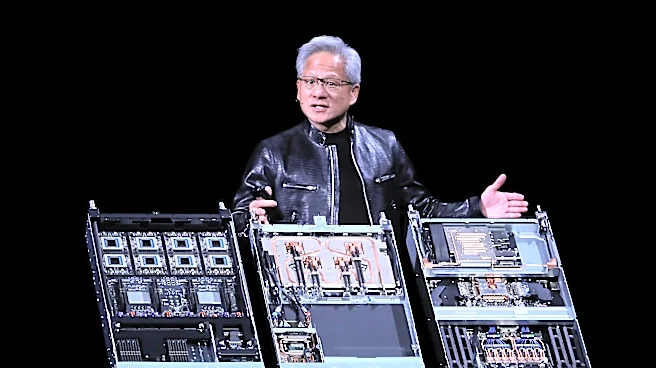
Nvidia has projected that the data center CPU market will reach $200 billion in the coming years, driven by the rise of agentic artificial intelligence (AI). This development is part of a broader trend where AI data centers are increasingly incorporating
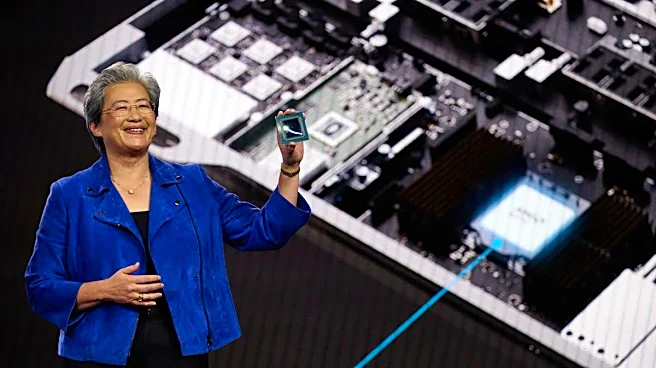
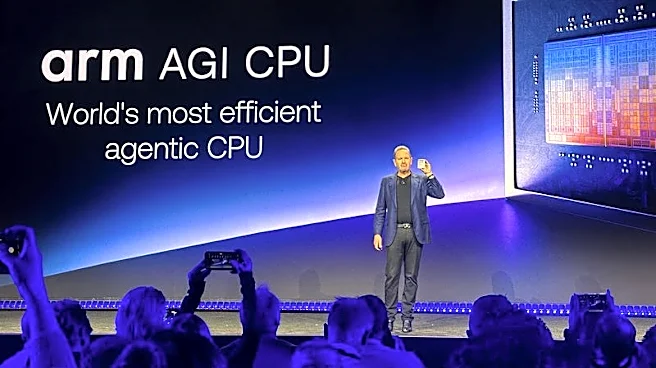
more central processing units (CPUs) alongside graphics processing units (GPUs). The shift is attributed to the need for chips that can handle sequential reasoning and work with tools, which are essential for AI agents. Nvidia's prediction comes as companies like Arm Holdings and Advanced Micro Devices (AMD) are also positioning themselves to capitalize on this growing market. Arm Holdings, traditionally known for providing intellectual property architecture for custom CPUs, has announced plans to design its own chips, targeting a significant share of the data center CPU market. Meanwhile, AMD continues to advance its technology roadmap, with its latest Venice CPU beginning mass production.
Why It's Important?
The projected growth in the AI chip market signifies a major shift in the semiconductor industry, with significant implications for companies involved in AI infrastructure. Nvidia's forecast highlights the increasing demand for high-performance CPUs, which are crucial for the development of agentic AI. This trend is likely to drive up CPU prices and spur innovation in chip design. Companies like Arm Holdings and AMD stand to benefit from this growth, as they expand their offerings to meet the needs of AI data centers. The competition among semiconductor companies is expected to intensify, with each firm vying for a larger share of the lucrative AI market. This could lead to advancements in chip technology and potentially lower costs for AI infrastructure, benefiting businesses and consumers alike.
What's Next?
As the AI chip market continues to expand, companies will likely increase their investments in research and development to enhance their product offerings. Nvidia, Arm Holdings, and AMD are expected to play pivotal roles in shaping the future of AI infrastructure. The competition among these companies could lead to further innovations in chip design and performance. Additionally, the growing demand for AI chips may prompt other tech giants to enter the market, further intensifying competition. Stakeholders, including investors and tech companies, will be closely monitoring these developments to capitalize on emerging opportunities in the AI sector.