






What's Happening?
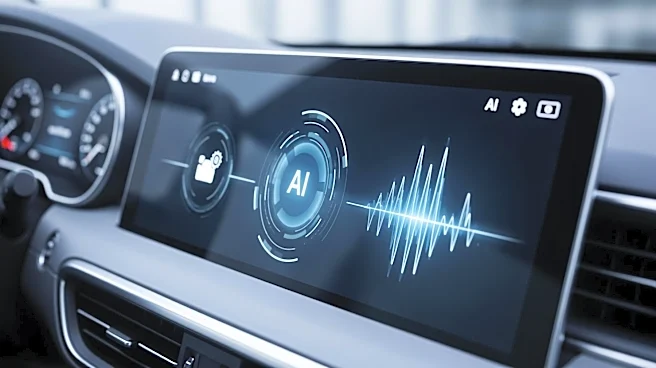
General Motors (GM) is deploying Google's Gemini AI assistant in approximately 4 million vehicles in the United States, specifically targeting model year 2022 and newer Cadillac, Chevrolet, Buick, and GMC vehicles equipped with Google built-in. This update,
delivered over the air, aims to enhance the current Google Assistant experience by allowing more natural and conversational interactions. The Gemini AI can perform a variety of tasks, including navigation, messaging, entertainment, and trip planning, with the ability to handle complex requests and back-and-forth conversations. This rollout is part of GM's broader strategy to integrate artificial intelligence more deeply into its vehicles, leveraging the connected vehicle foundation built through OnStar over the past 30 years.
Why It's Important?
The integration of Google's Gemini AI into GM vehicles represents a significant advancement in automotive technology, potentially transforming the driving experience by making it more interactive and efficient. This development could enhance driver safety and convenience by allowing hands-free operation for various tasks, thus reducing distractions. For commercial drivers, the AI's capabilities in route planning and logistics could improve operational efficiency. Additionally, this move underscores the growing trend of incorporating AI into everyday consumer products, highlighting the importance of connectivity and smart technology in the automotive industry. It also positions GM as a leader in the adoption of advanced AI technologies in vehicles, potentially influencing competitors to follow suit.
What's Next?
GM plans to introduce a more advanced, custom-built AI assistant later this year, which will leverage OnStar data and be tailored specifically to vehicle systems. This future development could further enhance the capabilities of GM's vehicles, offering even more personalized and efficient services to drivers. As AI technology continues to evolve, it is likely that more automotive manufacturers will explore similar integrations, potentially leading to a new standard in vehicle technology. Stakeholders, including tech companies and automotive manufacturers, will need to address challenges related to data privacy and security as these systems become more prevalent.