


What's Happening?
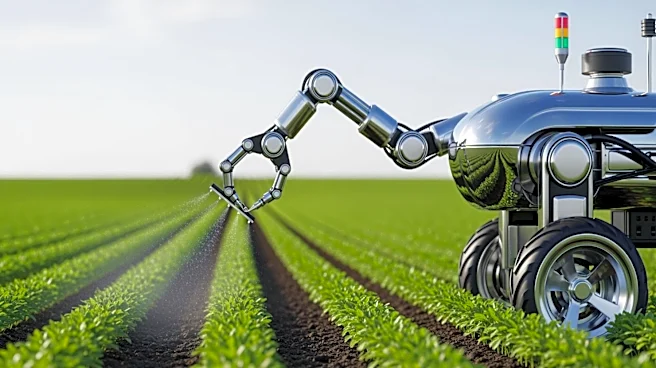
Yamaha Agriculture has introduced a new herbicide spraying attachment for its Prospr autonomous hybrid vehicle platform. This development, in collaboration with Croplands Equipment, enhances the Prospr's capabilities by automating weed control in orchards
and vineyards. The attachment integrates seamlessly into the Prospr's modular architecture, allowing for quick tool changes without significant downtime. It features automated nozzle activation, tank agitation, and real-time spray rate adjustments based on vehicle speed. The system also includes mechanical breakaway boom arms to protect crops and equipment during close-quarters operation. This innovation was showcased at Hort Connections 2026 in South Australia.
Why It's Important?
The introduction of the herbicide spraying attachment to the Prospr platform addresses the labor-intensive nature of weed management, which is crucial for maintaining crop quality and yield. By automating this process, Yamaha Agriculture aims to reduce the reliance on manual labor and improve efficiency in agricultural operations. The hybrid diesel-electric drivetrain of the Prospr offers up to 40 hours of runtime and claims a 70% reduction in fuel consumption compared to conventional alternatives, making it a sustainable choice for farmers. This advancement is part of Yamaha Agriculture's broader strategy to integrate AI-powered solutions and autonomous technologies in farming, potentially transforming the agricultural landscape by enhancing productivity and sustainability.
What's Next?
As the Prospr platform continues to evolve, Yamaha Agriculture is likely to expand its capabilities further, potentially introducing more attachments and features to address various agricultural challenges. The integration of AI and autonomous technologies in farming is expected to grow, with more farmers adopting these solutions to improve efficiency and reduce costs. Stakeholders in the agricultural sector, including farmers and equipment manufacturers, may respond by investing in similar technologies to stay competitive. Additionally, regulatory bodies might need to consider new guidelines and standards for the use of autonomous vehicles in agriculture.
Beyond the Headlines
The deployment of autonomous systems like the Prospr robot in agriculture raises questions about the future of labor in the industry. While these technologies can alleviate labor shortages and increase efficiency, they may also lead to job displacement for workers traditionally involved in manual farming tasks. Ethical considerations regarding the balance between technological advancement and employment opportunities will likely become more prominent as automation becomes more widespread. Furthermore, the environmental impact of reduced fuel consumption and precise chemical application could contribute positively to sustainable farming practices.