
What's Happening?
A recent study published in the Weed Science Society of America's journal, Weed Science, highlights the cost-cutting capabilities of smart sprayers equipped with artificial intelligence (AI) for Midwest
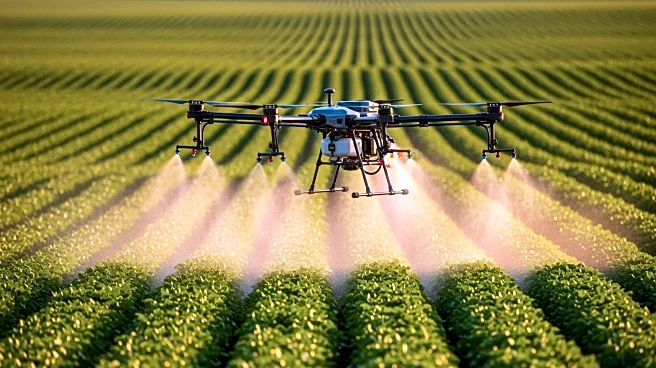
corn and soybean producers. Conducted in 2022 and 2023 near Manhattan, Kansas, and Seymour, Illinois, the research demonstrated that AI-enabled smart sprayers can significantly reduce the use of foliar herbicides compared to traditional broadcast applications. The study utilized a ONE SMART SPRAY sprayer, which was custom-built for small plot research and equipped with advanced imaging technologies. These technologies allowed the sprayer to distinguish between crops and weeds, enabling targeted herbicide applications. The research emphasized the importance of integrating weed management principles, such as crop rotations and the use of residual herbicides, alongside this technology.
Why It's Important?
The findings of this study are significant for the agricultural sector, particularly for corn and soybean producers in the Midwest, as they offer a potential reduction in herbicide costs without compromising weed control. This cost efficiency is crucial for farmers facing economic pressures and environmental regulations. By reducing the amount of herbicide used, smart sprayers can also contribute to more sustainable farming practices, minimizing chemical runoff and its impact on the environment. The adoption of AI technology in agriculture could lead to broader changes in farming practices, promoting precision agriculture and potentially increasing crop yields while reducing input costs.
What's Next?
As the technology becomes more widely available, farmers may increasingly adopt AI-enabled smart sprayers, leading to a shift in standard agricultural practices. The study suggests that growers could benefit from using two-boom, two-tank smart sprayers for simultaneous applications, which could further enhance efficiency. The agricultural industry may see increased investment in AI technologies, driving innovation and potentially leading to new developments in precision agriculture. Stakeholders, including agricultural equipment manufacturers and policymakers, may need to consider the implications of these technologies on farming practices and regulatory frameworks.