



What's Happening?
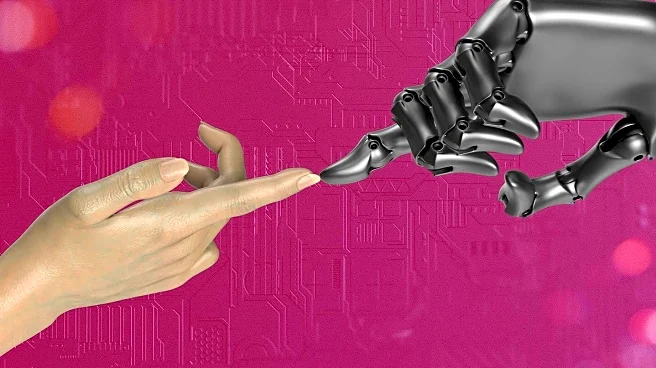
A growing number of individuals are turning to artificial intelligence (AI) for companionship and romantic relationships, as reported by CBS News. This trend is attributed to increasing loneliness in the digital age, according to Sriraam Natarajan, Ph.D., an AI expert at the University of Texas at Dallas. The use of AI in personal relationships is becoming more prevalent as people seek connections in a world where digital interactions often replace face-to-face communication. This development highlights a shift in how relationships are formed and maintained, with AI providing an alternative to traditional human interactions.
Why It's Important?
The rise in AI usage for personal relationships underscores significant societal changes. As loneliness becomes more widespread,
AI offers a solution for those seeking companionship without the complexities of human relationships. This trend could have profound implications for social dynamics, potentially altering how people form connections and perceive relationships. It raises questions about the nature of companionship and the role of technology in fulfilling emotional needs. Additionally, the increasing reliance on AI for personal interactions may impact mental health, social skills, and the traditional concept of relationships.
What's Next?
As AI continues to integrate into personal relationships, there may be increased scrutiny and debate over the ethical implications and potential consequences. Stakeholders, including technology developers, mental health professionals, and policymakers, may need to address issues such as privacy, emotional dependency, and the authenticity of AI-driven relationships. Future developments could include advancements in AI technology to better simulate human interactions, as well as potential regulations to ensure ethical use. The societal acceptance and adaptation to AI in personal relationships will likely evolve as technology advances.