








What's Happening?
In the first quarter of 2026, North American companies ordered 9,055 industrial robots valued at $543 million, according to the Association for Advancing Automation (A3). This represents a slight 0.1% decrease in units ordered compared to the same period
in 2025, and a 6.4% decline in revenue for suppliers. The decline in revenue was primarily due to a significant drop in orders from automotive original equipment manufacturers (OEMs), which fell by 35.1% in units and 48.2% in revenue. Despite this, other sectors such as life sciences, electronics, and food industries showed strong growth in robot orders, indicating a diversification in automation demand beyond traditional automotive manufacturing.
Why It's Important?
The flat growth in industrial robot orders highlights a shift in the robotics market, with non-automotive sectors increasingly adopting automation to enhance productivity and address workforce challenges. This trend suggests a broader application of robotics across various industries, potentially leading to increased operational resilience and efficiency. The decline in automotive OEM orders, however, underscores the cyclical nature of the industry and its impact on the robotics market. The diversification in demand could mitigate the effects of such downturns, benefiting suppliers who can adapt to the changing landscape.
What's Next?
As industries continue to invest in automation, the demand for collaborative robots is expected to grow, particularly in sectors like life sciences and electronics. Companies may focus on integrating these technologies to improve operational efficiency and address labor shortages. The ongoing diversification in automation demand could lead to further innovations and applications of robotics across different sectors, potentially reshaping the industrial landscape.
Beyond the Headlines
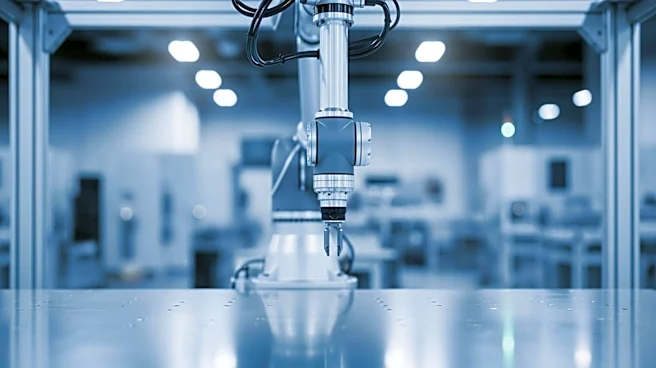
The increasing adoption of collaborative robots, which saw a 55.6% increase in units ordered, reflects a shift towards more flexible and adaptable automation solutions. This trend could lead to significant changes in workforce dynamics, as collaborative robots are designed to work alongside humans, enhancing productivity without replacing jobs. The ethical implications of this shift, including the need for reskilling workers, will be crucial considerations for businesses and policymakers.