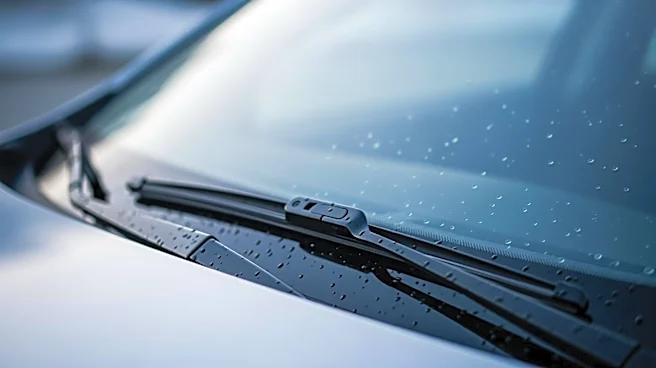

What's Happening?
Ford Motor Company has announced a recall of 422,613 SUVs and heavy-duty pickup trucks due to defective windshield wipers. The affected models include Lincoln Navigators and Ford Expeditions from 2021
to 2023, as well as Ford Super Duty trucks from 2022 to 2023. According to the National Highway Traffic Safety Administration (NHTSA), the windshield wiper arm's latch retention plate may have been produced with a defect, causing the wipers to operate erratically or detach completely. Although no accidents or injuries have been reported, Ford has received over 1,500 warranty claims related to the issue. The company plans to inspect and replace the faulty wiper arms free of charge, with owner notification letters expected to be mailed between April 13 and April 17, 2026.
Why It's Important?
This recall is significant as it affects a large number of vehicles, potentially impacting consumer safety and Ford's reputation. Defective windshield wipers can create hazardous driving conditions, especially in inclement weather, increasing the risk of accidents. The recall underscores the importance of vehicle safety standards and the role of regulatory bodies like the NHTSA in ensuring compliance. For Ford, addressing this issue promptly is crucial to maintaining consumer trust and avoiding potential legal liabilities. The recall also highlights the challenges automakers face in quality control and the need for continuous monitoring and improvement of manufacturing processes.
What's Next?
Ford is currently working on a permanent solution for the defective wipers. In the meantime, dealerships will inspect affected vehicles and replace any faulty wiper arms at no cost to the owners. The company is expected to communicate further details to vehicle owners through notification letters. Stakeholders, including consumers and industry analysts, will be watching closely to see how Ford manages the recall process and whether it impacts the company's market performance. Additionally, the recall may prompt other automakers to review their own safety protocols to prevent similar issues.