
What's Happening?
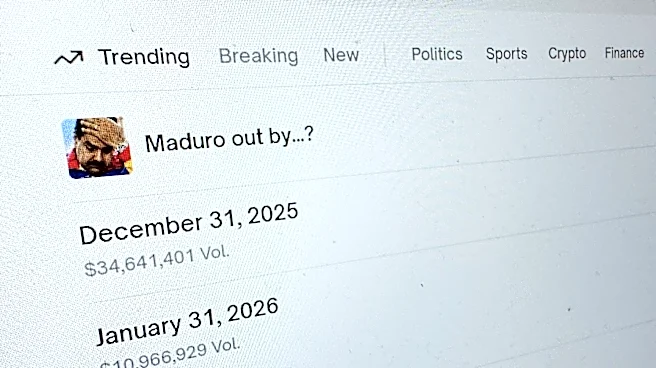
Gannon Van Dyke, a 38-year-old master sergeant in the U.S. Army Special Forces, has been charged with wire fraud and other felonies for allegedly using military secrets to make over $400,000 in trades
on Polymarket, a prediction market platform. Van Dyke attempted to open an account on Kalshi, a rival platform, but was blocked during the verification and know-your-customer process, according to Elisabeth Diana, head of communications for Kalshi. The indictment claims Van Dyke used classified information from his involvement in Operation Absolute Resolve, aimed at capturing Venezuelan President Nicolás Maduro, to inform his trades. Van Dyke appeared in federal court in North Carolina and was released on a $250,000 bond. Polymarket, which reported Van Dyke's suspicious activity to authorities, and Kalshi both have policies against insider trading.
Why It's Important?
This case highlights the potential for insider trading within prediction markets, raising concerns about the integrity of these platforms. The use of classified military information for personal financial gain poses significant ethical and legal challenges, potentially undermining trust in both military operations and financial markets. The incident underscores the need for stringent verification processes and regulatory oversight to prevent similar occurrences. The Commodity Futures Trading Commission, which oversees prediction markets, has defended their societal value, but this case may prompt calls for stricter regulations. The involvement of a high-ranking military officer in such activities could also impact public perception of military ethics and accountability.
What's Next?
As the legal proceedings against Van Dyke continue, there may be increased scrutiny on prediction markets and their regulatory frameworks. The Commodity Futures Trading Commission might face pressure to enhance oversight and enforcement to prevent insider trading. Additionally, the military may review its policies and training regarding the handling of classified information to prevent future breaches. The outcome of this case could influence future legislation or regulatory measures aimed at curbing insider trading in financial markets.
Beyond the Headlines
The case raises broader questions about the ethical use of prediction markets and the potential for manipulation of current events for financial gain. It also highlights the challenges of balancing innovation in financial markets with the need for security and ethical standards. The involvement of military personnel in such activities could lead to discussions about the intersection of military service and personal financial activities, potentially prompting policy reviews within the Department of Defense.