







What's Happening?
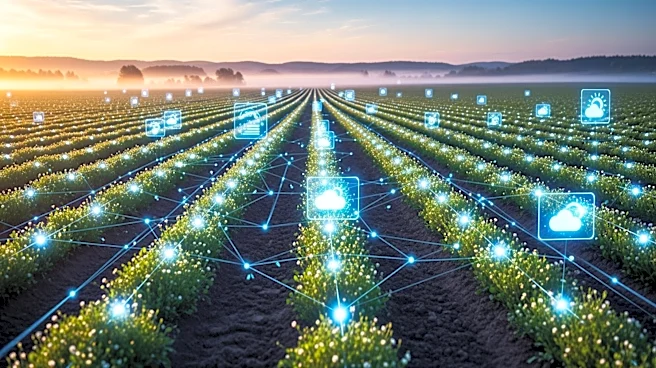
Artificial intelligence (AI) is playing a pivotal role in transforming India's agricultural ecosystem. The Indian government has launched the Digital Agriculture Mission, which includes AgriStack, a digital infrastructure designed to enhance agricultural productivity.
This initiative aims to create digital identities for millions of farmers, enabling efficient delivery of services and subsidies. AI technologies are being integrated to provide real-time advisory services, improve pest surveillance, and enhance market access. These advancements are crucial as Indian agriculture faces challenges from erratic monsoons and climate disruptions.
Why It's Important?
The integration of AI in agriculture is significant for India's economy, as the sector employs a large portion of the workforce and contributes substantially to the GDP. By leveraging AI, India can improve crop yields, reduce losses, and enhance food security. The use of technology also addresses systemic barriers such as delayed payments and limited market access. As AI becomes more accessible to farmers, it can lead to increased efficiency and sustainability in agricultural practices, ultimately benefiting the rural economy and supporting national food security goals.
Beyond the Headlines
While AI offers numerous benefits, its implementation in agriculture also raises concerns about data privacy and the digital divide. Ensuring that small and marginal farmers can access and benefit from these technologies is crucial. Additionally, building trust among farmers is essential for the widespread adoption of digital tools. The success of AI in agriculture will depend on addressing these challenges and ensuring that technological advancements are inclusive and equitable.