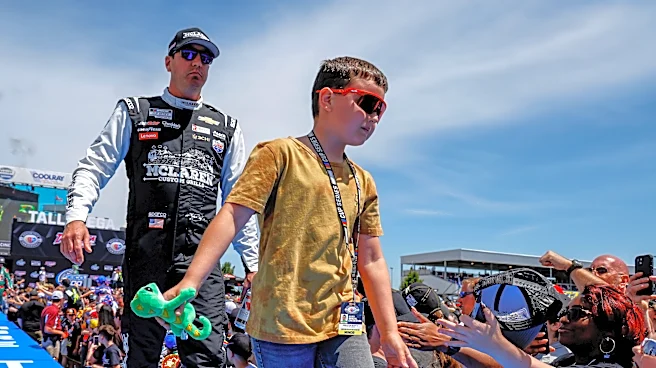








What's Happening?
Two-time NASCAR Cup Series champion Kyle Busch has passed away at the age of 41 due to complications from severe pneumonia that progressed into sepsis. His family announced the tragic news, requesting privacy during this difficult time. Sepsis, as described
by the Centers for Disease Control and Prevention, is a life-threatening response to infection that can lead to tissue damage, organ failure, and death. Busch's condition deteriorated rapidly, with reports indicating he was coughing up blood and experiencing shortness of breath before becoming unresponsive. He was transported to a hospital in Charlotte, North Carolina, where he later died. The racing community is mourning his loss, with Richard Childress Racing suspending the use of Busch's No. 8 car until his son, Brexton, is ready to race.
Why It's Important?
Kyle Busch's death is a significant loss to the NASCAR community and highlights the severe risks associated with pneumonia and sepsis. As a prominent figure in the sport, Busch's passing underscores the importance of early detection and treatment of infections to prevent such tragic outcomes. His death also impacts the racing team and fans, as they navigate the emotional and operational challenges following his sudden departure. The incident serves as a reminder of the critical need for awareness and education about sepsis, a condition that can arise from even minor infections, affecting individuals across various demographics.
What's Next?
In the wake of Kyle Busch's death, the NASCAR community is expected to pay tribute to his legacy and contributions to the sport. Richard Childress Racing has announced that they will use the No. 33 car until Busch's son, Brexton, is ready to race, indicating a future continuation of the Busch family's involvement in NASCAR. The team and fans will likely engage in memorial activities to honor Busch's achievements and impact on the sport. Additionally, there may be increased advocacy for sepsis awareness and prevention within the sports community, aiming to prevent similar tragedies.