
What's Happening?
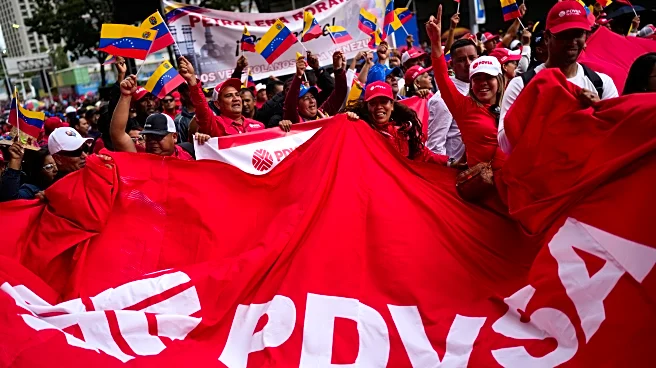
Chevron Corporation, the only oil supermajor currently operating in Venezuela, has announced a strategic decision to finance its oil investments in the country using cash generated from oil sales rather than injecting new capital. This approach reflects a cautious stance on capital expenditure in a nation with a history of nationalizing oilfields. Chevron's Chief Financial Officer, Eimear Bonner, stated that the company plans to increase its Venezuelan production by 50% over the next two years without altering its overall capital spending. This growth plan, however, requires additional authorizations from the U.S. Treasury. Chevron's operations in Venezuela, which produce approximately 250,000 barrels per day, contribute about 2% to the company's
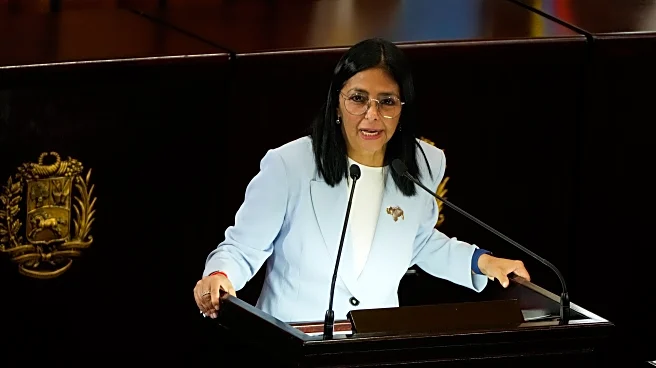
annual cash flow. The decision comes as Venezuela's Acting President Delcy Rodriguez is implementing reforms to attract foreign investment by lowering taxes and enhancing commercial stability.
Why It's Important?
Chevron's decision to adopt a self-funding model for its Venezuelan operations underscores the complexities of investing in a country with significant political and economic challenges. By relying on cash from oil sales, Chevron mitigates the risks associated with new capital investments in a volatile environment. This strategy could influence other international oil companies considering investments in Venezuela, potentially shaping the future of the country's oil industry. The move also highlights the importance of U.S. Treasury authorizations in facilitating international business operations in regions with complex geopolitical landscapes. For Venezuela, attracting foreign investment is crucial for revitalizing its oil industry, which holds the world's largest reserves but has been hampered by nationalization policies and economic instability.
What's Next?
Chevron's growth plan in Venezuela is contingent upon receiving further authorizations from the U.S. Treasury, which will be a critical factor in the company's ability to expand production. The success of Venezuela's reforms in creating a more attractive investment climate will also play a significant role in determining the level of foreign investment the country can secure. As Chevron moves forward with its self-funding model, other oil companies may watch closely to assess the viability of similar strategies in Venezuela. The outcome of these developments could have broader implications for the global oil market, particularly in terms of supply dynamics and geopolitical influences.