






What's Happening?
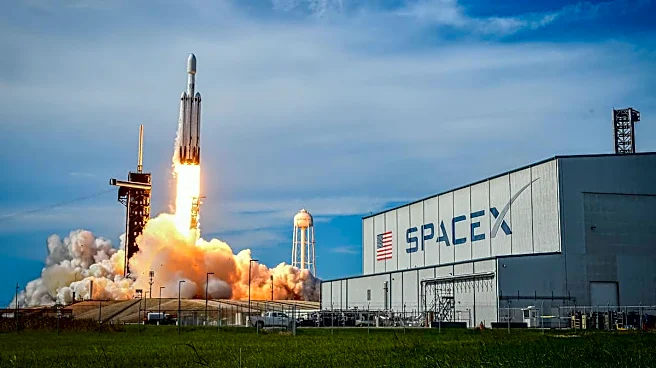
SpaceX is preparing for what is expected to be the largest initial public offering (IPO) in history, with plans to raise at least $75 billion by selling over 555 million shares at $135 each. This IPO, set to price on Thursday and begin trading on Friday
under the ticker SPCX on the Nasdaq, is anticipated to cause significant market volatility. Investors are expected to sell other stocks to free up cash for purchasing SpaceX shares, potentially leading to price dislocations. Greg Boutle, head of U.S. equity derivative strategy at BNP Paribas, highlighted that the IPO's massive market cap could lead to liquidity challenges, especially if retail investors and passive funds engage in simultaneous buying and selling. SpaceX, a leader in the space industry since 2002, has dominated global rocket launches and operates over 10,000 Starlink satellites.
Why It's Important?
The SpaceX IPO is significant due to its potential to disrupt the stock market, as investors may need to liquidate other holdings to participate in the offering. This could lead to a sell-off in other stocks, particularly those in the tech sector, which have seen substantial gains recently. The IPO's timing, near the end of the second quarter, coincides with an expected $100 billion in unrelated stock sales, compounding the potential for market instability. Additionally, the IPO's success could influence future offerings from other high-profile companies like OpenAI and Anthropic, which are also planning to go public. The influx of new shares from these companies could further strain market demand.
What's Next?
Following the SpaceX IPO, the market will closely watch for potential price dislocations and liquidity issues. If the IPO performs well, it could encourage more retail and passive investors to sell other stocks to invest in SpaceX, amplifying market volatility. The IPO's impact will also be observed in the context of upcoming public offerings from AI companies, which could shift investor focus and capital allocation. Additionally, the market will need to absorb a significant volume of new shares from secondary offerings by major tech companies like Alphabet, further testing the market's capacity to handle increased supply.