
What's Happening?
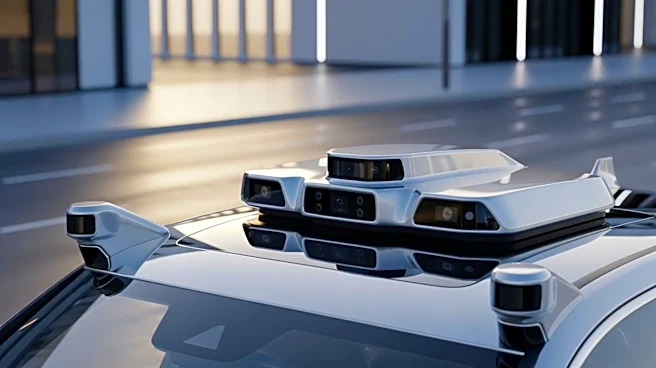
Uber has announced plans to deploy 500 data-collection vehicles globally this year to support its autonomous vehicle (AV) partners. These vehicles, Hyundai Ioniq 5s equipped with advanced sensors, will
gather real-world driving data. This initiative marks a significant step for Uber's AV Labs division, which aims to create a comprehensive dataset for training self-driving software. The vehicles are fitted with 14 cameras, eight solid-state lidar sensors, and nine radars, with data processed through Nvidia's Dual Drive Thor computer. Uber's goal is to develop a geographically diverse set of training data, enhancing the capabilities of its AV partners, including Avride, Waymo, and WeRide.
Why It's Important?
This development is crucial for the advancement of autonomous driving technology. By providing a vast amount of high-fidelity data, Uber is positioning itself as a key player in the AV industry. The data collected will help improve the accuracy and safety of self-driving systems, potentially accelerating the deployment of autonomous vehicles. This initiative also reflects Uber's strategic shift towards becoming a platform for AV technology, following the sale of its autonomous vehicle division to Aurora in 2020. The success of this project could lead to significant advancements in the AV sector, benefiting both technology developers and consumers.
What's Next?
Uber plans to have 50 of these data-collection vehicles operational by the summer. As the project progresses, Uber may adjust the sensor suite based on the evolving needs of its partners. The data collected will be shared with over 30 AV technology partners, potentially leading to new collaborations and innovations in the field. The success of this initiative could influence other companies to adopt similar strategies, further advancing the development of autonomous vehicles.