
What's Happening?
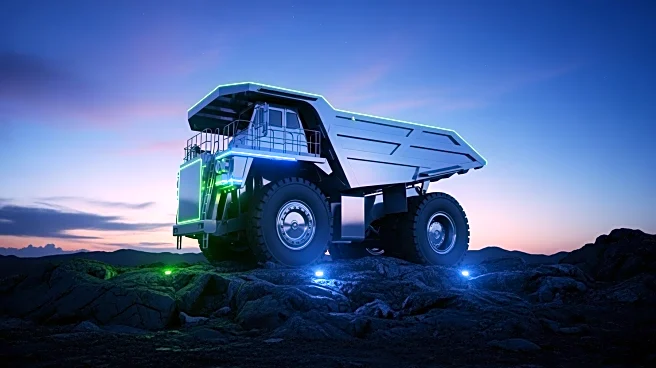
Scania and LKAB have expanded their partnership to further electrify mining transport operations. They have introduced a new fully electric 8x4 heavy tipper truck, named 'Sleipner', into the underground
operations at LKAB's Malmberget iron ore mine in northern Sweden. This vehicle is the first of its kind from Scania, featuring two steerable front axles and is designed to handle heavy loads and challenging mine roads. The truck is powered by two MP20 battery packs with a total capacity of 416 kWh and a 400 kW electric motor, replacing its internal-combustion counterpart. This initiative is part of LKAB's efforts to achieve a fossil-free solution for transporting waste rock, which could lead to significant CO2 savings given the company's annual transport of over 5 million tonnes of waste rock.
Why It's Important?
The introduction of electric trucks in mining operations represents a significant step towards reducing carbon emissions in an industry traditionally reliant on fossil fuels. By adopting electric vehicles, LKAB aims to decrease its environmental footprint, aligning with global sustainability goals. This move not only highlights the potential for electrification in heavy industries but also sets a precedent for other mining companies to follow. The collaboration between Scania and LKAB demonstrates the importance of partnerships in advancing technological innovations and achieving environmental targets. The success of this initiative could encourage further investment in electric vehicle technology across various sectors, potentially leading to broader adoption and advancements in electric transport solutions.
What's Next?
If the electric truck performs as expected, it could pave the way for a broader rollout of similar vehicles in mining operations worldwide. Scania and LKAB plan to continue testing and refining these solutions in real-world conditions, which could lead to further innovations and improvements in electric mining transport. The success of this project may also influence policy decisions and encourage other companies to invest in electrification, contributing to a more sustainable mining industry. Additionally, the data and insights gained from this collaboration could inform future developments in electric vehicle technology, potentially expanding its application beyond mining to other heavy industries.