







What's Happening?
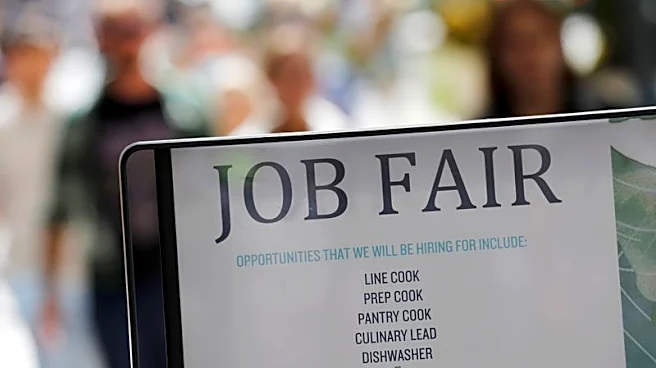
The Labor Department has reported an increase in jobless claims to 215,000, up from 210,000 the previous week. Despite this rise, layoffs remain low, with claims stabilizing in a range of 200,000 to 250,000 per week since the end of the pandemic recession
in 2020. The total number of people receiving unemployment benefits increased by 15,000 to 1.79 million. This low level of claims suggests that most U.S. companies are not resorting to layoffs, although job creation has been slow. The average monthly job creation from January to April this year was 76,000, a significant decrease from the nearly 400,000 monthly average from 2021 to 2023. The economic outlook is clouded by the Iran war, which has led to higher energy prices and economic uncertainty.
Why It's Important?
The increase in jobless claims, although minor, highlights the ongoing challenges in the U.S. labor market. The low level of layoffs indicates stability, but the slow pace of job creation suggests that economic growth is not as robust as in previous years. The Iran war has exacerbated economic uncertainty, with rising energy prices impacting both consumers and businesses. This situation could lead to increased financial strain on households and potentially slow down economic recovery. The labor market's resilience is crucial for maintaining low unemployment rates, but the current geopolitical tensions pose a risk to this stability.
What's Next?
The U.S. economy may face further challenges if the Iran war continues to impact global oil supplies and energy prices. Businesses might need to adjust to higher operational costs, which could affect hiring decisions. Policymakers will likely monitor the situation closely to mitigate any adverse effects on the economy. The labor market's response to these challenges will be critical in determining the overall economic trajectory in the coming months.