







What's Happening?
Costco has experienced unprecedented demand for gasoline as prices have surged above $4 nationwide and $6 on the West Coast. The retailer manages to undercut local gas stations by approximately 30 cents per gallon by leveraging its membership fees for profit.
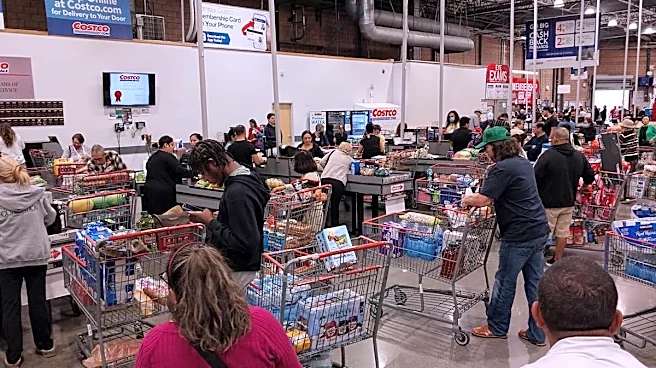
This strategy has led to increased foot traffic in Costco warehouses, as about half of the customers who fill up at Costco gas stations also shop in the store. Despite the high demand, Costco faces a challenge as gas is one of its lowest-margin products, which affects its overall profit margin when prices are high. Last year, gas sales contributed to a slight increase in Costco's gross margin when prices were low, but the opposite occurred last quarter. Nevertheless, Costco's approach has driven customer loyalty and increased sales in other product categories.
Why It's Important?
Costco's ability to offer cheaper gas is significant in the current economic climate, where consumers are highly sensitive to price changes. By maintaining lower gas prices, Costco not only attracts more customers but also encourages them to shop in its warehouses, boosting overall sales. This strategy highlights the importance of membership models and scale in retail, allowing Costco to absorb lower margins on gas while benefiting from increased sales in other areas. The approach also underscores the challenges faced by smaller, independent gas stations that cannot compete with Costco's pricing strategy. As gas prices continue to fluctuate, Costco's model may serve as a case study for other retailers looking to balance low-margin products with overall profitability.
What's Next?
Costco aims to maintain the momentum gained from increased gas sales and customer loyalty, even if gas prices fall. The company plans to continue offering competitive prices and discounts on other products to drive foot traffic and sales. Analysts and investors remain cautious about the sustainability of these gains, especially if gas prices decrease. However, Costco's leadership believes that the loyalty built through its pricing strategy will support long-term growth. The company may also explore additional ways to enhance customer experience and value, further solidifying its position in the retail market.