







What's Happening?
Florida State University (FSU) and the University of Georgia have mutually agreed to cancel their previously scheduled home-and-home football series for the 2027 and 2028 seasons. Originally, FSU was set to host Georgia at Doak Campbell Stadium in 2027,
with a return game in Athens, Georgia, in 2028. The decision to cancel these games comes as both schools are now participating in nine-game conference schedules, a change from when the original agreement was made in 2019. FSU's Vice President and Director of Athletics, Michael Alford, stated that the schools are now in discussions to arrange a future neutral-site contest, which they are optimistic about finalizing. This adjustment will not affect the total number of home games on FSU's schedule moving forward.
Why It's Important?
The cancellation of the home-and-home series between FSU and Georgia reflects broader scheduling challenges faced by college football programs as they adapt to evolving conference mandates. Both the Atlantic Coast Conference (ACC) and the Southeastern Conference (SEC) have increased their conference game requirements, impacting non-conference scheduling flexibility. This development highlights the complexities of college football scheduling, where traditional rivalries and marquee matchups must be balanced with conference obligations. The move to a neutral-site game could offer both schools a high-profile matchup without compromising their home game schedules, potentially benefiting fans and stakeholders by maintaining competitive and financially lucrative games.
What's Next?
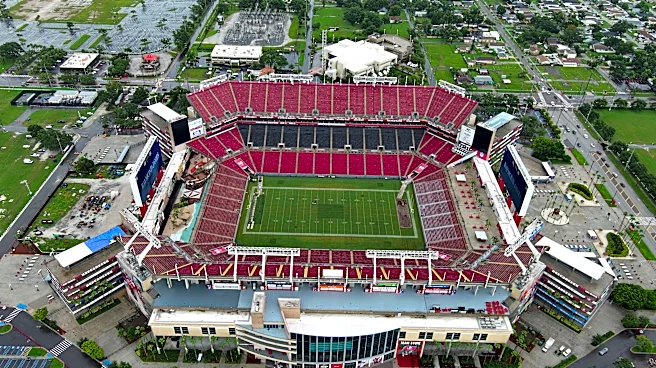
FSU and Georgia are in the process of negotiating a neutral-site game, with potential locations like Tampa's Raymond James Stadium being considered. While no official confirmation has been made, such a game would likely draw significant attention and attendance, given the stature of both programs. The schools will need to finalize details, including the date and location, to ensure the game fits within their respective schedules. Stakeholders, including fans, sponsors, and local economies, will be keenly interested in the outcome of these discussions, as neutral-site games often bring substantial economic benefits to host cities.