






What's Happening?
Ken Macken, CEO of Workr Robotics, provides insights into the current state of industrial robotics, emphasizing the importance of practical deployment over general-purpose autonomy. In an interview, Macken highlights the challenges manufacturers face,
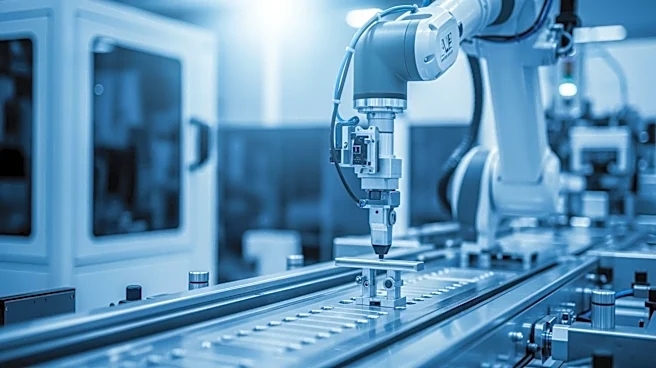
such as the need for reliable and consistent robotic solutions that can perform specific tasks accurately and repeatedly. Workr Robotics focuses on automating repetitive tasks like palletizing and machine tending, offering a 'robotics-as-labor' model that charges by the hour instead of requiring large capital investments. This approach aims to lower barriers to automation adoption by providing flexibility and reducing financial risk for manufacturers.
Why It's Important?
The insights shared by Macken underscore a significant shift in the robotics industry towards more practical and economically viable solutions for manufacturers. By prioritizing operational reliability and flexibility, Workr Robotics addresses key pain points such as labor shortages and output targets. The 'robotics-as-labor' model offers a cost-effective alternative to traditional robotics purchasing, which can be prohibitive due to high upfront costs. This model allows manufacturers to adapt quickly to changing production needs without committing to expensive, rigid systems. As a result, manufacturers can achieve higher efficiency and productivity, potentially leading to increased competitiveness in the global market.
What's Next?
As the demand for flexible and reliable automation solutions grows, Workr Robotics is likely to continue expanding its offerings to meet the evolving needs of manufacturers. The company's focus on rapid deployment and operational consistency positions it well to capitalize on the increasing interest in automation across various industries. Future developments may include further enhancements to their AI models and automation technologies, enabling even greater adaptability and efficiency on the factory floor. Additionally, the success of the 'robotics-as-labor' model could inspire other companies to adopt similar pricing strategies, further transforming the industrial robotics landscape.