



What's Happening?
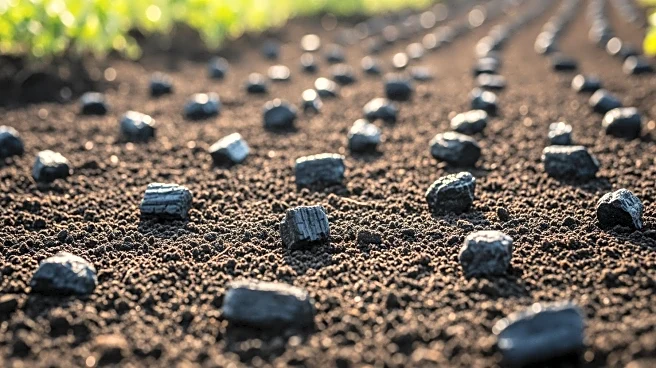
A new pyrolysis system has been installed on a farm near Regina, aiming to convert crop waste into biochar, a product that enhances soil and sequesters carbon. This technology involves the thermal decomposition of organic material at high temperatures in the absence of oxygen, breaking down waste into gas, liquid, and solid char. The process is versatile, capable of utilizing various waste sources such as poultry litter, cattle manure, and municipal solid waste. The resulting biochar is used as a soil additive, offering a sustainable solution for waste management and soil improvement.
Why It's Important?
The adoption of pyrolysis technology in agriculture represents a significant advancement in sustainable waste management and soil enhancement. By converting agricultural
and municipal waste into biochar, this technology not only reduces landfill use but also improves soil health and carbon sequestration. This is particularly important as environmental regulations tighten and the need for sustainable agricultural practices grows. The use of biochar can lead to better crop yields and reduced reliance on chemical fertilizers, contributing to a more sustainable and resilient agricultural system. This innovation highlights the role of technology in addressing environmental challenges and supporting sustainable agriculture.