







What's Happening?
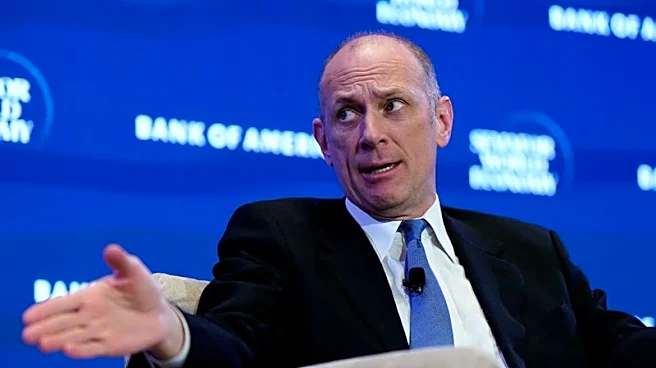
Federal Reserve Governor Stephen Miran announced his resignation, effective once Kevin Warsh is sworn in as the new Fed Chair. Miran's departure was anticipated as Warsh is set to take his seat on the Fed’s Board of Governors. In his resignation letter,
Miran criticized the Fed's approach to measuring inflation, warning that it could lead to unnecessarily high unemployment. He expressed optimism about Warsh's planned changes to the Fed's communication and balance sheet policies. Miran, known for his dovish stance, consistently voted for interest-rate cuts during his tenure.
Why It's Important?
Miran's resignation and Warsh's appointment mark a significant shift in the Federal Reserve's leadership, potentially impacting U.S. monetary policy. Warsh's approach may differ from Miran's dovish stance, influencing future interest rate decisions and economic strategies. This transition occurs at a critical time as the Fed navigates economic challenges, including inflation and employment. The leadership change could affect financial markets, investor confidence, and the broader U.S. economy, as stakeholders adjust to new policy directions.
What's Next?
With Warsh's confirmation as Fed Chair, the Federal Reserve is expected to undergo policy adjustments. Warsh's leadership will likely bring changes in how the Fed communicates its policies and manages its balance sheet. These changes could influence the Fed's approach to inflation and interest rates, impacting economic growth and stability. Financial markets and economic analysts will closely watch Warsh's initial moves and statements for indications of the Fed's future policy trajectory.