







What's Happening?
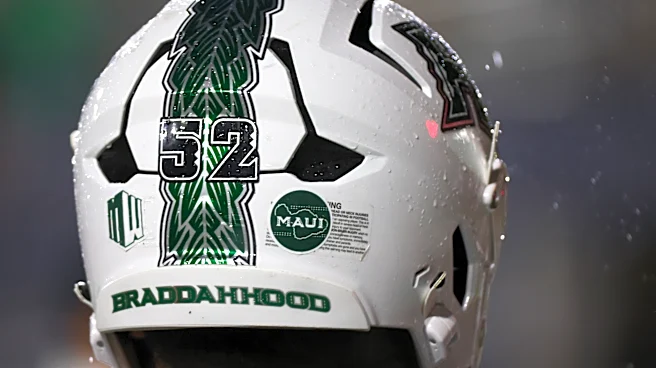
The University of Hawaii has announced a new broadcasting partnership with Hawaii News Now, moving its sports broadcasts from Spectrum Sports to free over-the-air channels. This change aims to increase accessibility for fans both in Hawaii and beyond.
The partnership will cover 110 home sporting events annually, including football, basketball, volleyball, and select baseball, softball, and soccer games. The move is part of a broader trend among sports entities to make their content more accessible, following similar decisions by NBA and NHL teams. The university expects to earn $7.5 million annually from this new deal, a significant increase from the previous $3.2 million under the pay-per-view model.
Why It's Important?
This shift to free broadcasts represents a significant change in how University of Hawaii sports are consumed, potentially increasing viewership and fan engagement. The decision aligns with a growing trend in the sports industry to prioritize accessibility over traditional revenue models. By moving to free broadcasts, the university can reach a wider audience, enhancing its brand and potentially attracting more support and sponsorships. The financial implications are also notable, as the university anticipates increased revenue, which can be reinvested into its athletic programs. This move could set a precedent for other universities and sports organizations considering similar changes.
What's Next?
As the University of Hawaii transitions to this new broadcasting model, it will be important to monitor the impact on viewership and revenue. The university will need to ensure that the quality of broadcasts meets fan expectations and that the transition is smooth. Additionally, the Mountain West's upcoming direct-to-consumer streaming service could offer further opportunities for monetization and fan engagement. The success of this initiative could influence other universities and sports organizations to reevaluate their broadcasting strategies, potentially leading to broader changes in the sports media landscape.