






What's Happening?
The sustainable agriculture market is anticipated to grow significantly, with projections indicating it will reach USD 37,368 million by 2033. This growth is driven by a compound annual growth rate (CAGR) of 10.30% from 2025 to 2033. The market encompasses
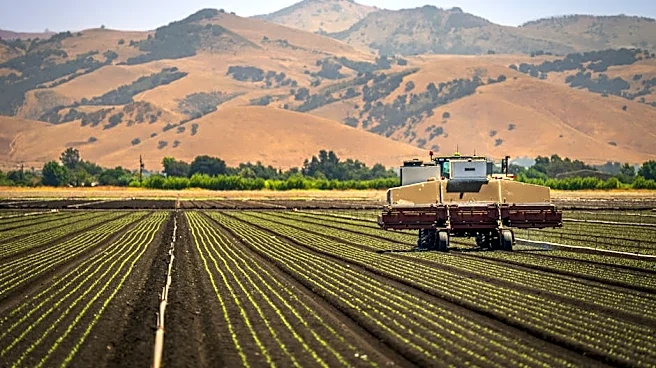
products, technologies, and practices aimed at enhancing agricultural productivity while conserving natural resources and reducing environmental impact. Key components include precision farming, organic farming, water-efficient irrigation systems, and regenerative agriculture. The increasing demand for eco-friendly farming practices, climate resilience, and government sustainability initiatives are major factors contributing to this growth. Recent developments in the U.S. include substantial federal funding for sustainable agriculture research, focusing on alternatives to pesticides and lower-chemical farming practices.
Why It's Important?
The expansion of the sustainable agriculture market is crucial for addressing global food security challenges while mitigating environmental impacts. As the demand for food continues to rise, sustainable practices offer a pathway to increase crop yields without exacerbating soil degradation or carbon emissions. This market growth supports the transition to more resilient agricultural systems, which are essential in the face of climate change. The U.S. government's investment in sustainable agriculture research underscores the importance of developing innovative solutions to reduce dependency on traditional farming methods and enhance food production systems. This shift not only benefits the environment but also supports economic growth by creating new opportunities in the agricultural sector.
What's Next?
The sustainable agriculture market is expected to continue evolving with advancements in technology and increased investment in research and development. Stakeholders, including farmers, agri-tech companies, and policymakers, are likely to focus on integrating smart technologies and sustainable practices into mainstream agriculture. This includes the adoption of precision farming tools, smart irrigation systems, and regenerative agriculture techniques. As the market grows, collaborations between governments, private sectors, and research institutions will be pivotal in driving innovation and ensuring the widespread adoption of sustainable practices. The ongoing commitment to sustainability initiatives will play a critical role in shaping the future of agriculture.