


What's Happening?
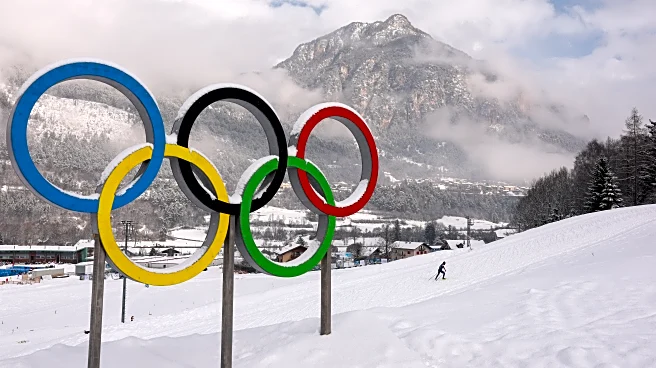
As the Winter Olympics commence in Milan and Cortina d’Ampezzo, Italy, U.S. athletes are facing unexpected protests. Demonstrators gathered in Milan to oppose the reported deployment of U.S. Immigration and Customs Enforcement (ICE) agents during the Games. The protests, held in Piazza XXV Aprile, featured signs depicting the Olympic rings as handcuffs and slogans like 'No ICE in Milan.' The involvement of ICE has been criticized by International Olympic Committee President Kirsty Coventry as 'distracting' and 'sad.' Milan's Mayor Giuseppe Sala expressed strong opposition, labeling ICE as a 'militia that kills.' The protests are fueled by recent incidents involving ICE, including the deaths of two Minnesotans and the detention of a young boy,
which have heightened tensions.
Why It's Important?
The protests against ICE's presence at the Winter Olympics highlight ongoing international criticism of U.S. immigration policies. This situation could impact the perception of U.S. athletes and officials at the Games, potentially affecting their morale and performance. The controversy also underscores broader geopolitical tensions and the role of international sporting events as platforms for political expression. The involvement of ICE, a domestic agency, in an international event raises questions about the appropriateness and implications of such actions, potentially affecting diplomatic relations and the image of the U.S. on the global stage.
What's Next?
The protests are likely to continue as the Games progress, with potential implications for the safety and focus of U.S. athletes. The International Olympic Committee and U.S. officials may need to address these concerns to ensure the athletes' well-being and the smooth conduct of the Games. Additionally, the situation may prompt discussions on the role of domestic agencies in international events and the need for clear guidelines to prevent similar controversies in the future.
Beyond the Headlines
The protests against ICE at the Winter Olympics reflect deeper issues of immigration policy and human rights. The involvement of ICE in the Games could lead to increased scrutiny of U.S. immigration practices and their impact on international relations. This situation also highlights the power of sports as a platform for political and social activism, where global audiences can be mobilized to address contentious issues. The long-term effects could include changes in how international sporting events are managed and the role of host countries in ensuring a neutral and inclusive environment.