



What's Happening?
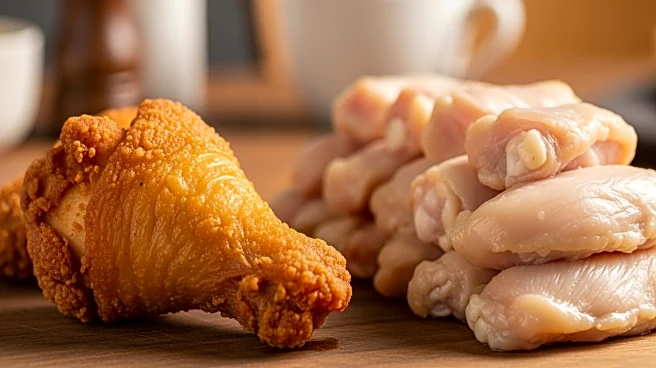
Buffalo Wild Wings recently emerged victorious in a legal dispute concerning the labeling of its 'boneless wings.' A customer, Aimen Halim, filed a lawsuit in Illinois, claiming that the term 'boneless wings' was misleading because the product is made from chicken breast meat rather than deboned chicken wings. The lawsuit argued that consumers might expect actual wings with bones removed, rather than chicken breast pieces. However, the judge dismissed the case, stating that 'boneless wings' is a common menu term and not a literal description. The judge noted that food names often describe the style rather than the precise anatomical content, similar to how 'buffalo wings' do not involve actual buffalo. Despite the legal victory, the debate continues
online, with many arguing that 'boneless wings' are essentially chicken nuggets with sauce.
Why It's Important?
This legal ruling is significant for the food industry, particularly for restaurants and food service providers that use creative or non-literal names for menu items. The decision underscores the importance of consumer perception and the flexibility allowed in food labeling. For Buffalo Wild Wings, the ruling allows them to continue marketing their product under a popular and recognizable name without the need for rebranding or altering their menu descriptions. This case also highlights the ongoing conversation about transparency and consumer expectations in food labeling, which can impact brand trust and customer satisfaction. The outcome may influence how other food businesses approach product naming and marketing strategies.
What's Next?
Although the case was dismissed, the judge allowed the plaintiff until March 20 to file an amended complaint if additional facts can be presented. This leaves the door open for potential further legal challenges. Meanwhile, Buffalo Wild Wings has embraced the court's decision, reinforcing their stance on social media. The ongoing public debate may prompt other food companies to review their product descriptions to avoid similar legal challenges. Additionally, consumer advocacy groups might push for clearer labeling standards to prevent potential misunderstandings in the future.