






What's Happening?
Vertical Aerospace, a UK-based electric air taxi developer, has successfully closed an $850 million financing package. This package, initially announced on March 30, includes an $800 million agreement with major stakeholders Mudrick Capital and Yorkville
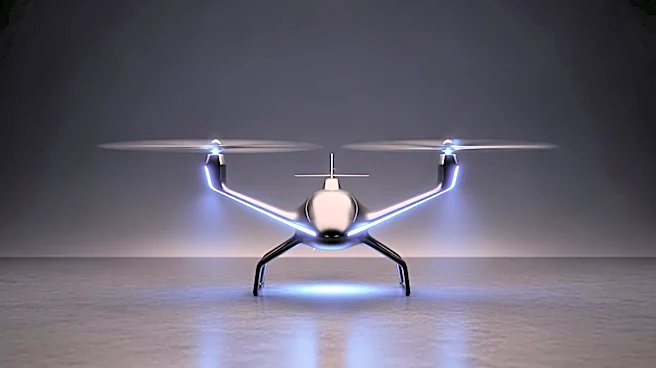
Advisors Global, alongside a completed $50 million capital raise. The funding is intended to support the development of Vertical's Valo electric vertical take-off and landing (eVTOL) aircraft. The company has already accessed $30 million of this financing, ensuring it has approximately $160 million in near-term working capital. This financial boost follows the successful two-way transition flight of Vertical's VX4 prototype, marking a significant milestone in its operational progress.
Why It's Important?
The successful acquisition of this substantial funding package is crucial for Vertical Aerospace as it aims to solidify its position in the burgeoning eVTOL market. The funds will enable the company to continue its development efforts towards achieving certification by 2028. This development is significant in the context of the global push towards sustainable urban air mobility solutions. The eVTOL market is expected to revolutionize urban transportation by providing efficient, low-emission alternatives to traditional vehicles. Vertical's progress could influence the competitive landscape, potentially impacting other players in the industry, such as Joby Aviation and Archer Aviation, who are also vying for market share in this innovative sector.
What's Next?
With the new funding secured, Vertical Aerospace is poised to advance its development roadmap, focusing on achieving certification for its eVTOL aircraft by 2028. The company will likely continue to conduct rigorous testing and development of its prototypes to meet regulatory standards. As the eVTOL market evolves, Vertical may also explore strategic partnerships or additional funding opportunities to enhance its technological capabilities and market reach. The success of its VX4 prototype's transition flight suggests that further advancements in its operational capabilities are imminent, potentially setting the stage for commercial deployment in the coming years.