




What's Happening?
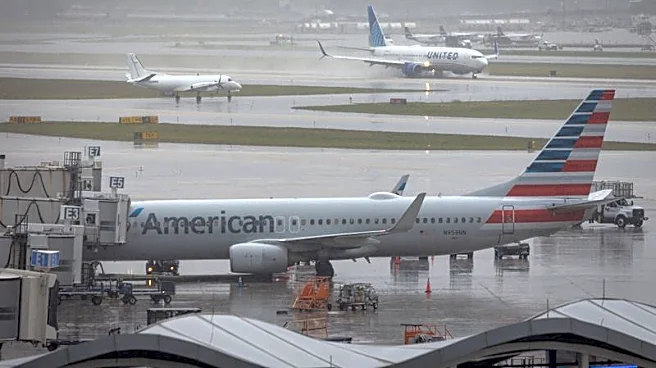
The International Air Transport Association (IATA) has revised its profit forecast for the global airline industry, predicting a significant drop due to a jet fuel crisis exacerbated by geopolitical tensions. The ongoing US-Iran conflict has led to the closure
of the Strait of Hormuz, a critical chokepoint for oil transport, causing a spike in fuel prices. As a result, the IATA now expects net profits for 2026 to be $23 billion, a sharp decrease from the previously forecasted $41 billion. This situation has already led to the bankruptcy of budget airline Spirit, and other carriers may face similar fates or be forced into mergers.
Why It's Important?
The rising fuel costs are a major concern for the airline industry, which relies heavily on stable fuel prices to maintain profitability. The closure of the Strait of Hormuz has created a bottleneck in oil supply, driving up costs and impacting airlines' operational budgets. This situation could lead to higher ticket prices for consumers, reduced flight routes, and potentially fewer options for budget travel. The financial strain on airlines may also result in job losses and reduced investment in new technologies or services, affecting the broader economy.
What's Next?
Airlines are likely to respond by increasing ticket prices and reducing the number of flights to manage costs. There may also be a push for government intervention or subsidies to support struggling carriers. The industry will need to explore alternative fuel sources or more efficient technologies to mitigate the impact of future fuel price volatility. Additionally, airlines may seek strategic partnerships or mergers to consolidate resources and remain competitive.