




What's Happening?
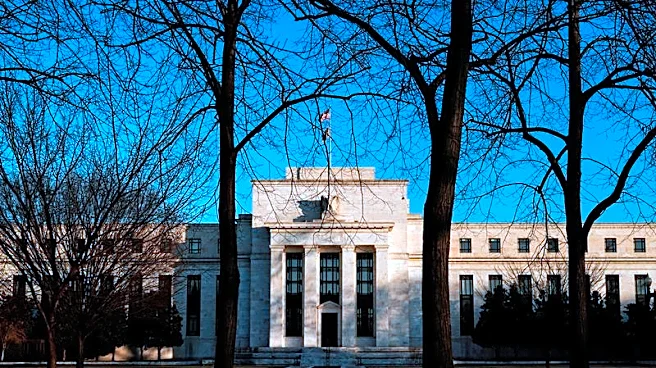
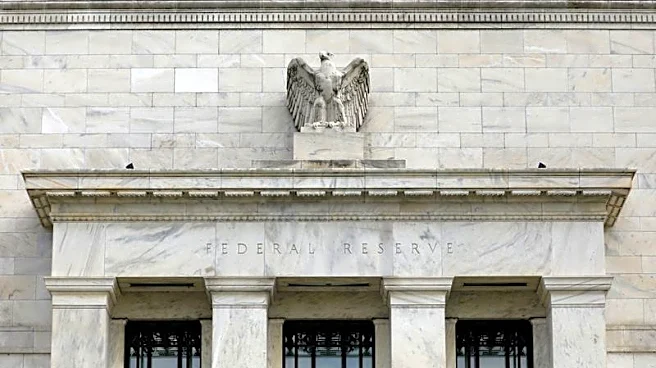
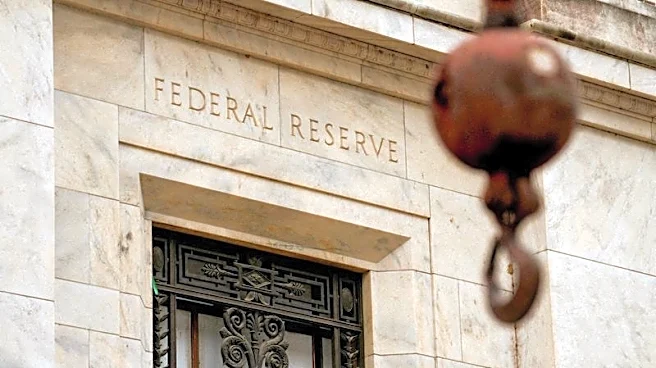
The U.S. Federal Reserve has decided to keep its benchmark interest rate steady at 3.5% to 3.75% for the third consecutive meeting in 2026. This decision comes amidst rising inflation, particularly driven by increased gas prices due to the ongoing conflict
in Iran. The Federal Open Market Committee (FOMC) noted that economic activity is expanding at a solid pace, with low job gains and a stable unemployment rate, but inflation remains elevated above the Fed's long-term target of 2%. The decision was not unanimous, with some members advocating for a rate cut, while others opposed any indication of an easing bias.
Why It's Important?
The Fed's decision to hold rates steady reflects its cautious approach in balancing economic growth with inflation control. The ongoing conflict in the Middle East has introduced significant uncertainty into the economic outlook, complicating the Fed's dual mandate of maximum employment and stable prices. The elevated inflation, particularly in energy costs, poses a risk of stagflation, a scenario of stagnant growth coupled with high inflation. This situation could impact consumer spending and business investment, potentially slowing economic recovery. The Fed's stance also highlights the political pressures it faces, particularly from the Trump administration, which has been pushing for rate cuts.
What's Next?
The Fed's future actions will likely depend on developments in the Middle East and their impact on global oil prices and inflation. The FOMC will continue to monitor economic indicators closely, with potential adjustments to interest rates if inflationary pressures persist or if economic growth falters. The ongoing investigation into Fed Chair Jerome Powell and the political dynamics surrounding his succession could also influence future monetary policy decisions.