



What's Happening?
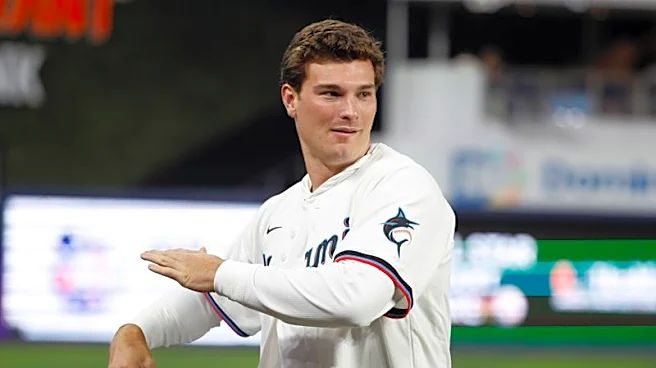
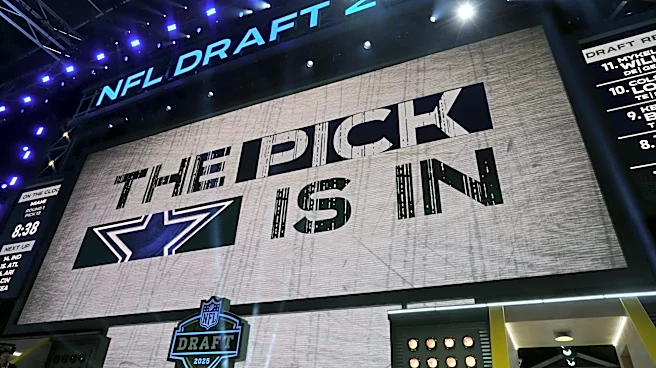
The New York Jets, during the second round of the 2026 NFL Draft, aimed to select Jacob Rodriguez, a linebacker from Texas Tech, with their 44th pick. However, the Miami Dolphins selected Rodriguez at the 43rd position, prompting the Jets to adjust their strategy.
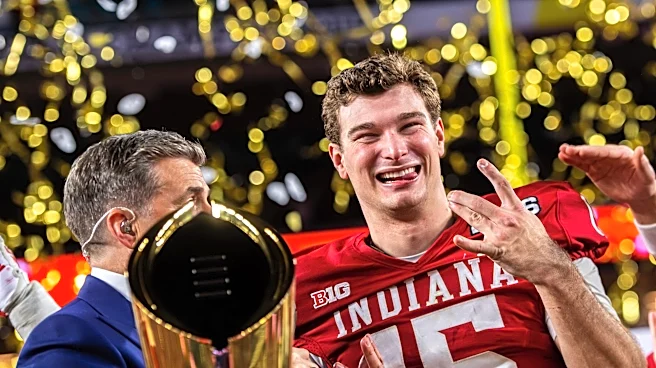
The Jets traded their 44th pick to the Detroit Lions, moving back to the 50th position and acquiring an additional fourth-round pick. With the 50th pick, the Jets selected D'Angelo Ponds, a cornerback from Indiana, who was a standout player on Indiana's national championship-winning team. Ponds is known for his aggressive and scrappy playing style, and his selection marks a strategic move by the Jets to strengthen their defense. Additionally, the Jets had earlier selected Ponds' Indiana teammate, wide receiver Omar Cooper Jr., making it a notable draft for Indiana players joining the Jets.
Why It's Important?
This strategic pivot by the New York Jets highlights the dynamic nature of the NFL Draft, where teams must be prepared to adapt quickly to changing circumstances. By acquiring D'Angelo Ponds and an additional draft pick, the Jets have potentially bolstered their defensive lineup while also gaining future draft capital. This move could have significant implications for the Jets' performance in the upcoming season, as they aim to build a more competitive team. The decision to select two players from Indiana also underscores the Jets' focus on players with proven track records in high-pressure situations, such as national championships. This approach may influence other teams to consider similar strategies in future drafts.
What's Next?
The Jets will now focus on integrating their new draft picks into the team and assessing how these players can contribute to their overall strategy for the upcoming season. The performance of D'Angelo Ponds and Omar Cooper Jr. during training camps and pre-season games will be closely monitored to determine their roles within the team. Additionally, the Jets' management will continue to evaluate their roster and make further adjustments as needed to enhance their competitiveness. The success of this draft strategy will ultimately be measured by the team's performance in the regular season and their ability to reach the playoffs.