
What's Happening?
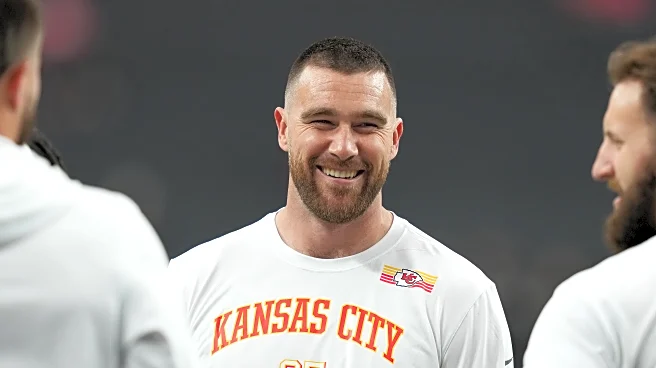
Travis Kelce, the star tight end for the Kansas City Chiefs, is set to discuss his future with the team following Super Bowl LX, according to a report by NFL Network. Kelce, who is 36 years old, will become
a free agent next month after completing his two-year, $34.25 million contract extension. The Chiefs are reportedly interested in retaining Kelce, but they face a significant financial challenge as they are currently over $55 million above the projected salary cap of more than $300 million. Despite the team's lackluster 6-11 season, Kelce has expressed enthusiasm about the return of offensive coordinator Eric Bieniemy, whom he praised on a recent podcast. Kelce's career achievements include joining Jerry Rice as one of the only players in NFL history with at least 12 consecutive seasons of 800 receiving yards. He led the Chiefs in receptions, yards, and receiving touchdowns last season.
Why It's Important?
The potential departure of Travis Kelce could have significant implications for the Kansas City Chiefs and the NFL. Kelce is a key player for the Chiefs, holding records as the team's all-time leader in receptions, receiving yards, and touchdown receptions. His decision to stay or leave will impact the team's strategy and performance in the upcoming seasons. Additionally, the Chiefs' financial situation, being over the salary cap, highlights the broader challenges NFL teams face in managing player contracts and maintaining competitive rosters. Kelce's future also intersects with his personal life, as he is engaged to pop star Taylor Swift, which could influence his career decisions.
What's Next?
Following the Super Bowl, discussions between Kelce and the Chiefs will determine his future with the team. If Kelce decides to leave, the Chiefs will need to explore options to fill the gap left by one of their most productive players. The team's management will also need to address their salary cap issues to ensure they can build a competitive roster for the next season. Fans and analysts will be closely watching these developments, as they could signal broader trends in player retention and financial management within the NFL.