



What's Happening?
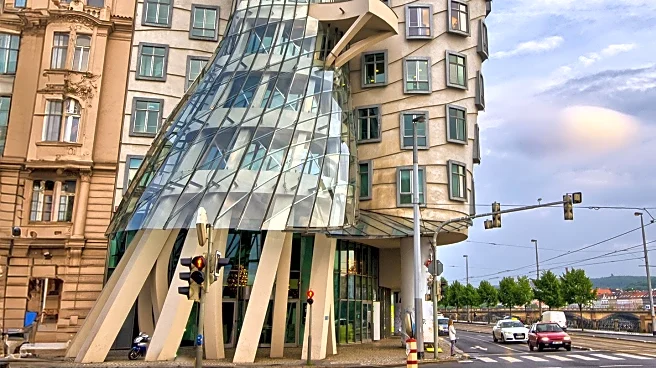
Renowned architect Frank Gehry, who passed away at the age of 96, is celebrated for his innovative and imaginative architectural designs. Gehry's work includes iconic structures such as the Guggenheim Museum in Bilbao, Spain, and the Walt Disney Concert Hall in Los Angeles. His designs are characterized by their unique use of materials and forms, often incorporating curves and reflective surfaces. Gehry's contributions to architecture have earned him numerous accolades, including the prestigious Pritzker Prize. His buildings are not only architectural marvels but also cultural landmarks that attract millions of visitors worldwide.
Why It's Important?
Frank Gehry's architectural legacy has had a profound impact on modern architecture, influencing both contemporary
design and urban landscapes. His work challenges traditional architectural norms, pushing the boundaries of what buildings can represent and how they interact with their environments. Gehry's designs have become cultural icons, contributing to the identity and tourism appeal of the cities they inhabit. His approach to architecture has inspired a new generation of architects to explore innovative design solutions, emphasizing creativity and functionality.
Beyond the Headlines
Gehry's work raises important discussions about the role of architecture in society, particularly in terms of cultural expression and urban development. His buildings often serve as catalysts for economic revitalization in their respective areas, demonstrating the potential of architecture to drive social and economic change. Gehry's legacy also prompts reflection on the sustainability of architectural practices and the integration of art and technology in building design.