






What's Happening?
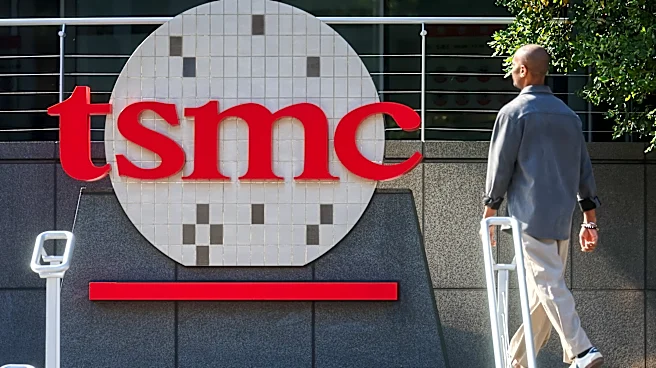
Taiwan Semiconductor Manufacturing Company (TSMC), a leading producer of advanced AI chips, has reported a 58% increase in its first-quarter profit, reaching record levels. This growth is attributed to the rising demand for high-performance chips used
in artificial intelligence applications. TSMC's net profit for January to March climbed to T$572.5 billion, marking the company's eighth consecutive quarter of double-digit growth. The demand for TSMC's 3-nanometre technology, crucial for AI chip production, continues to exceed the company's current production capacity. TSMC's shares have risen by 35% this year, significantly outperforming the broader market. The company is also investing heavily in expanding its production capabilities, including a US$165 billion investment in building chip factories in Arizona, USA.
Why It's Important?
TSMC's significant profit increase underscores the growing importance of AI technology and the semiconductor industry's role in supporting this trend. As a major supplier to tech giants like Nvidia and Apple, TSMC's performance is a bellwether for the tech sector's health. The company's expansion plans, including its investment in the U.S., highlight the strategic importance of diversifying production locations amid global supply chain challenges. This growth also reflects the increasing reliance on advanced semiconductor technology across various industries, potentially influencing global economic dynamics and technological advancements.
What's Next?
TSMC's upcoming earnings call will be closely watched for any updates on its capital spending plans, which could indicate the company's confidence in sustained AI demand. Analysts are particularly interested in whether TSMC will maintain or increase its 2026 capital spending projections. Additionally, geopolitical tensions, such as the war in the Middle East, pose potential risks to the supply of essential semiconductor materials, which TSMC will need to navigate carefully. The company's strategic decisions in the coming months will likely impact its market position and the broader semiconductor industry.