
What's Happening?
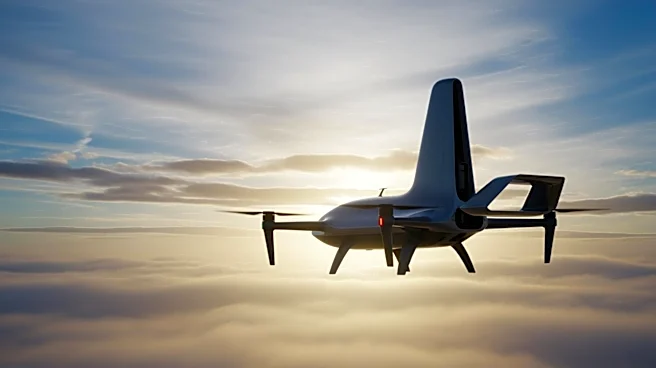
JOUAV has introduced the CW-80E, a Vertical Take-Off and Landing (VTOL) Unmanned Aerial System (UAS) designed for weather modification missions, including cloud seeding and precipitation enhancement. This
new UAV is built on a large fixed-wing platform, enhancing operational efficiency and safety by reducing reliance on manned flights. The CW-80E is equipped with integrated flight control and payload management systems, allowing for precise execution under varying atmospheric conditions. It can carry warm cloud flares and a cloud particle imaging payload, enabling operators to analyze cloud microphysical conditions and execute targeted seeding. The system supports multiple environmental applications such as rainfall and snowfall enhancement, hail suppression, and forest fire prevention. With a maximum takeoff weight of 100 kg and a wingspan of 5 meters, the CW-80E can carry up to 25 kg of payload and has a flight endurance of up to 8 hours. It operates at altitudes up to 5,000 meters and can cover a radius of 100 to 200 km, making it suitable for large-scale deployment in challenging terrains.
Why It's Important?
The introduction of the CW-80E represents a significant advancement in the field of weather modification, offering a more precise and cost-effective alternative to traditional manned aircraft. This development is crucial as global demand for weather modification grows, driven by the need to manage environmental challenges such as droughts, floods, and forest fires. The UAV's ability to operate in regions with limited infrastructure or challenging terrain expands the potential for atmospheric intervention in areas previously inaccessible to conventional aircraft. This could lead to more effective management of weather-related phenomena, potentially mitigating the impacts of climate change and extreme weather events. The CW-80E's capabilities also highlight the broader industry trend towards utilizing unmanned systems for environmental management, providing agencies with flexible and scalable tools for addressing complex weather challenges.
What's Next?
As the CW-80E enters the market, it is likely to attract interest from government agencies and private companies involved in environmental management and disaster mitigation. The UAV's deployment could lead to increased collaboration between technology providers and meteorological organizations, aiming to enhance weather modification strategies. Additionally, regulatory bodies may need to establish guidelines for the use of such advanced UAVs in atmospheric operations, ensuring safety and compliance with international standards. The success of the CW-80E could also spur further innovation in the UAV industry, encouraging the development of more sophisticated systems for environmental applications.