


What's Happening?
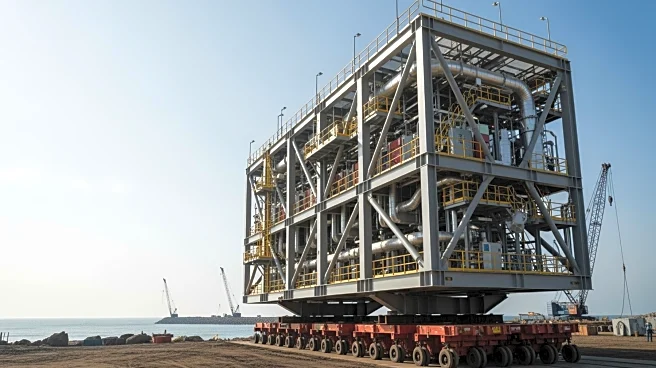
Woodfibre LNG has received its heaviest module, weighing 10,847 metric tonnes, for its liquefaction facility. This module, delivered by the heavy cargo vessel Red Zed 1, is crucial for the LNG production process, cooling natural gas to -162°C to compress
it into a liquid for overseas shipment. The facility is notable for using Siemens electric-drive motors, which connect to BC Hydro’s renewable power grid, significantly reducing greenhouse gas emissions compared to conventional gas turbine-driven processes. The project is set to be completed in 2027, with all 19 modules expected on site by spring.
Why It's Important?
The arrival of the liquefaction module marks a significant milestone in Woodfibre LNG's commitment to sustainable energy production. By utilizing electric-drive technology, the facility aims to set a new standard for low-emission LNG production, positioning Canada as a leader in environmentally responsible energy exports. This development could influence global LNG markets by demonstrating the feasibility of integrating renewable energy sources into large-scale industrial operations, potentially encouraging other projects to adopt similar technologies.
What's Next?
As construction progresses, Woodfibre LNG will focus on integrating the remaining modules and preparing for operational commencement in 2027. The project may attract attention from environmental groups and policymakers interested in sustainable energy solutions. Additionally, the facility's regulatory framework, overseen by an Indigenous government, could serve as a model for future projects seeking to balance industrial development with community and environmental stewardship.