



What's Happening?
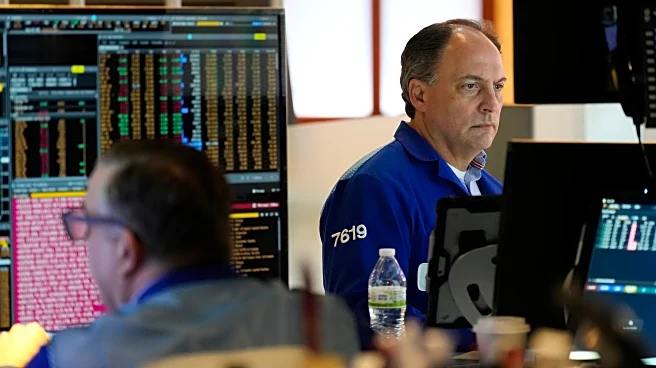
On Thursday, U.S. stock markets experienced a significant downturn, with the S&P 500 dropping 1.6%, marking its second-worst day since Thanksgiving. The Dow Jones Industrial Average fell by 669 points, or 1.3%, and the Nasdaq composite decreased by 2%. This decline was largely driven by investor concerns over the impact of artificial intelligence (AI) on various companies. Notably, Cisco Systems saw a 12.3% drop despite exceeding profit and revenue expectations, as it projected lower profit margins in the upcoming quarter. AppLovin, a software company, also faced a 19.7% decrease in stock value amid fears that AI could disrupt its business model. These developments reflect broader market apprehensions about whether heavy investments in AI will
yield sufficient returns in terms of profits and productivity.
Why It's Important?
The stock market's reaction underscores the growing uncertainty surrounding AI's impact on business profitability and market stability. Companies heavily investing in AI, such as those in the tech sector, face scrutiny over whether these expenditures will translate into tangible financial benefits. This skepticism is affecting stock valuations and could lead to increased borrowing costs for companies, particularly those with lower credit ratings. The situation also highlights potential risks for the broader economy, as AI-related disruptions could influence capital spending and investment plans. Additionally, the market's response may prompt companies to reassess their AI strategies and financial forecasts, potentially affecting employment and innovation in the tech industry.
What's Next?
Investors and analysts will closely monitor upcoming economic reports, including Friday's inflation data, which could influence Federal Reserve policy decisions. A strengthening job market might lead the Fed to maintain current interest rates, despite calls for reductions. This decision could further impact market dynamics, particularly if inflationary pressures persist. Companies may need to adjust their AI investment strategies to align with evolving market conditions and investor expectations. Additionally, the ongoing debate over AI's long-term economic impact is likely to continue, influencing corporate decision-making and regulatory considerations.