



What's Happening?
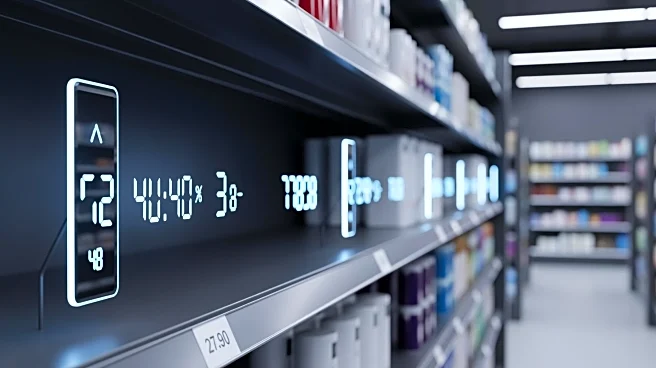
Walmart has announced plans to install digital price tags in all its U.S. stores by the end of 2026, replacing traditional paper tags. This move aims to enhance efficiency and accuracy in pricing, allowing for real-time updates and reducing the time employees
spend on manual price changes. The digital tags, known as DSLs, are expected to streamline operations and improve customer experience by ensuring consistent pricing across online and in-store platforms. However, the introduction of this technology has raised concerns among lawmakers about the potential for surge pricing, prompting legislative efforts to regulate its use.
Why It's Important?
The adoption of digital price tags represents a significant shift in retail operations, reflecting broader trends towards automation and digital integration. For Walmart, this could mean improved operational efficiency and cost savings, potentially leading to lower prices for consumers. However, the technology also poses challenges, particularly regarding consumer trust and transparency. Lawmakers are concerned that digital pricing could lead to dynamic pricing models that disadvantage consumers, especially in a high-inflation environment. The outcome of this initiative could influence retail practices across the industry.
What's Next?
As Walmart rolls out digital price tags, it will need to address consumer concerns about pricing transparency and fairness. The company may engage in public relations efforts to educate consumers about the benefits of the technology and ensure that it is not used for surge pricing. Meanwhile, legislative actions, such as the Stop Price Gouging in Grocery Stores Act, could impose restrictions on the use of digital pricing in large retail stores. The retail industry will be closely watching the implementation and public response to this technology.
Beyond the Headlines
The introduction of digital price tags could have broader implications for the retail industry, potentially setting a precedent for other retailers to follow. It raises questions about the balance between technological innovation and consumer protection, highlighting the need for clear regulations to prevent misuse. The move also reflects a growing trend towards digital transformation in retail, which could lead to further innovations in customer service and supply chain management.