







What's Happening?
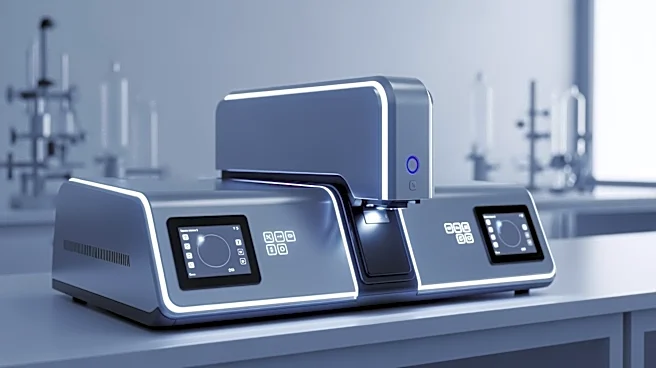
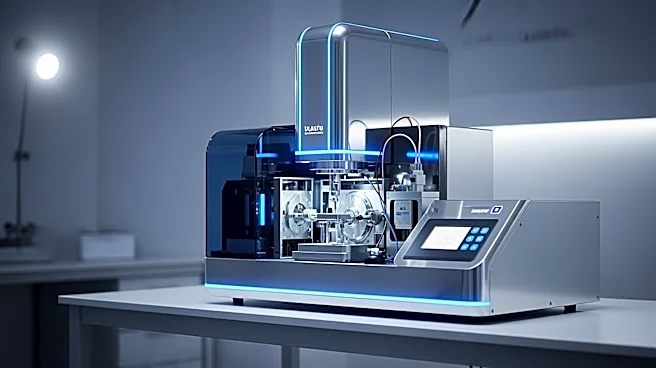
Agilent Technologies has introduced the Agilent 9500 Triple Quadrupole ICP-MS, a new inductively coupled plasma mass spectrometry system designed to enhance trace elemental analysis. This system aims to help laboratories transition from single to triple
quadrupole technology, offering faster data acquisition and advanced interference removal. The 9500 ICP-MS is equipped with innovations such as the Air Cell and Advanced Helium Mode, which simplify workflows and reduce reliance on oxygen cylinders. This launch is part of Agilent's strategy to provide laboratories with tools that improve productivity and data quality while reducing operational costs.
Why It's Important?
The introduction of the Agilent 9500 ICP-MS addresses the growing demand for more efficient and accurate trace element analysis in various industries, including environmental, pharmaceutical, and food testing. By reducing acquisition time and simplifying complex workflows, the system allows laboratories to handle larger workloads with greater confidence in their results. This advancement is crucial for laboratories facing resource constraints and increasing testing demands, as it enables them to maintain high standards of data quality while managing costs effectively.
What's Next?
Following the launch, Agilent Technologies will likely focus on supporting laboratories in adopting the new system, providing training and resources to facilitate the transition. The broader analytical instrumentation market may see a shift towards more accessible and practical advanced technologies, as laboratories seek to enhance their capabilities without significant disruptions. Agilent's continued innovation in this space could lead to further developments in analytical technologies, potentially setting new industry standards for trace element analysis.