
What's Happening?
The US pavilion at the Venice Biennale has selected Alma Allen, a Utah-born, Mexico-based artist, to represent the United States. This decision was marked by controversy as the initial artist chosen was dropped
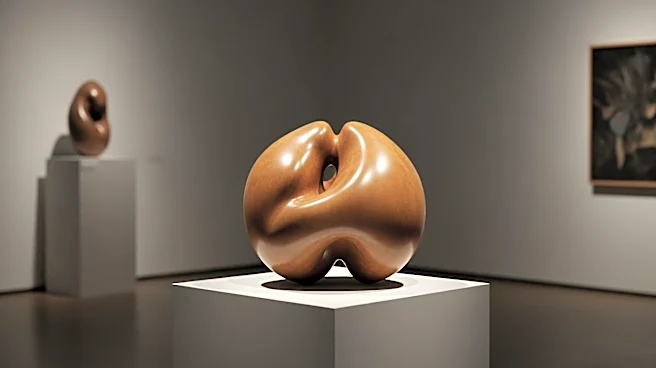
before an official announcement, and Allen's selection was delayed due to a US government shutdown. Allen, known for his geologically inspired sculptures, was a surprising choice due to his lesser-known status compared to previous artists. The State Department highlighted the selection as part of the Trump administration's effort to showcase American excellence. The exhibition, titled 'Call Me the Breeze,' aims to reflect on artistic excellence through Allen's unique sculptural vocabulary, which transforms geological materials into forms that resist singular interpretation.
Why It's Important?
The selection of Alma Allen for the US pavilion at the Venice Biennale is significant as it reflects broader themes of artistic expression and national identity. The choice underscores a shift towards showcasing diverse and perhaps less conventional American artists on an international stage. This move could influence how American art is perceived globally, potentially opening doors for other emerging artists. The exhibition's focus on renewal and unity aligns with the upcoming 250th anniversary of the Declaration of Independence, offering a platform for reflection on America's cultural and historical narratives. The decision also highlights the intersection of art and politics, as the State Department's involvement suggests a strategic use of cultural diplomacy.
What's Next?
As the Venice Biennale progresses, the reception of Alma Allen's work will be closely watched by both the art community and political observers. The exhibition's success could influence future selections for the US pavilion, potentially encouraging a continued focus on diverse and innovative artists. Additionally, the themes of the exhibition may spark discussions on the role of art in addressing national identity and historical reflection. Stakeholders, including art critics, cultural institutions, and government bodies, will likely evaluate the impact of this representation on America's cultural diplomacy and its implications for future international art exhibitions.
Beyond the Headlines
The choice of Alma Allen and the thematic focus of 'Call Me the Breeze' may have deeper implications for the art world and cultural policy. The exhibition's emphasis on material transformation and open interpretation could inspire new artistic movements that prioritize conceptual depth and historical context. Furthermore, the integration of poetry and personal narratives within the exhibition may encourage a multidisciplinary approach to art curation, fostering collaborations across different creative fields. This development could also prompt a reevaluation of how national identity is expressed through art, potentially influencing cultural policies and funding priorities.