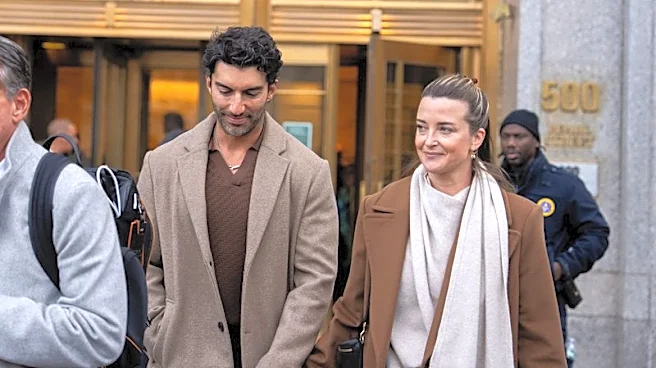

What's Happening?
Blake Lively has been awarded legal fees in a legal dispute with fellow actor and director Justin Baldoni over their 2024 film 'It Ends With Us.' A judge ruled that Lively can recover legal costs related
to her defense against a countersuit Baldoni filed after she sued him in December 2024. The judge cited a California law that protects survivors of sexual harassment and discrimination from retaliatory lawsuits. This law mandates that the plaintiff must pay the defendant's legal fees if a defamation claim is dismissed. However, the judge denied Lively's claims for punitive damages, stating they did not align with federal procedural rules. The dispute was largely settled last month, with Lively receiving no monetary compensation but allowed to pursue legal fees.
Why It's Important?
This ruling highlights the legal protections available to individuals who face retaliatory lawsuits in cases of alleged harassment and discrimination. The decision underscores the importance of California's legal framework in safeguarding individuals from intimidation through legal means. For the entertainment industry, this case illustrates the complexities of legal disputes involving high-profile figures and the potential reputational risks involved. The outcome may influence how future legal battles are approached, particularly in cases involving allegations of harassment and creative control disputes. The ruling also reflects the ongoing challenges in balancing legal protections for both plaintiffs and defendants in the entertainment sector.
What's Next?
While the legal fees have been awarded, the broader implications of this case may continue to resonate within the entertainment industry. Stakeholders may closely watch for any changes in how similar disputes are handled, particularly regarding the application of California's anti-SLAPP laws. The case may prompt discussions about the roles and rights of independent contractors versus employees in film productions. Additionally, the public and industry reactions to the ruling could influence future legal strategies and the handling of similar disputes.