



What's Happening?
Lucid Group, during its investor day in New York on March 12, announced a comprehensive financial and product strategy aimed at transitioning from a niche luxury manufacturer to a high-volume premium automotive player. Interim CEO Marc Winterhoff highlighted
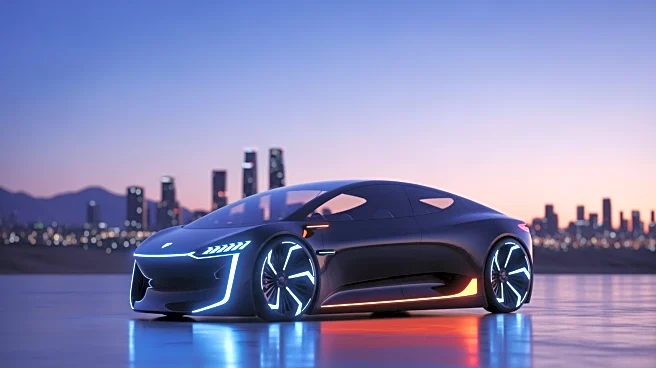
the company's pivot towards higher-volume segments, emphasizing a path to positive free cash flow and sustainable profitability. Central to this strategy is the introduction of a new Lucid Midsize platform and the Atlas electric drive unit, which are designed to enhance manufacturing efficiency and reduce costs. The company also plans to diversify its revenue streams through strategic partnerships, including a collaboration with Uber to deploy midsize platform vehicles for autonomous mobility. Additionally, Lucid introduced a concept for a two-seat robotaxi named Lunar, showcasing its commitment to autonomy-ready vehicle architectures.
Why It's Important?
This strategic shift is significant as it positions Lucid Group to compete more effectively in the global automotive market, particularly against combustion-powered vehicles. By focusing on cost efficiency and scalability, Lucid aims to improve its financial performance and market share. The introduction of the Midsize platform and the Atlas drive unit reflects a move towards more affordable electric vehicles, potentially broadening Lucid's customer base. The partnership with Uber underscores the growing importance of autonomous vehicle technology and could enhance Lucid's role in this emerging sector. This strategy not only aims to secure Lucid's financial future but also aligns with broader industry trends towards electrification and autonomy.
What's Next?
Lucid plans to scale its Gravity SUV throughout 2026 while maintaining strict capital allocation discipline. The company is also finalizing its agreement with Uber, which could lead to a significant deployment of its midsize platform vehicles. As Lucid continues to refine its manufacturing processes and expand its product offerings, it will likely face competition from established automakers and new entrants in the electric vehicle market. The success of its new strategy will depend on its ability to execute these plans effectively and respond to market dynamics, including potential geopolitical challenges that could impact its operations.