



What's Happening?
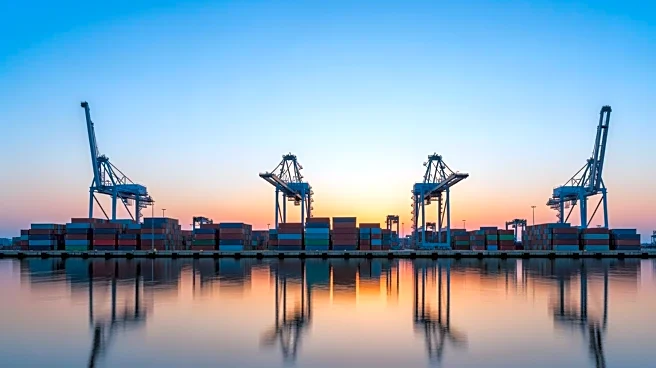
The Port of Los Angeles, the busiest marine gateway in the United States, is preparing for future growth despite a volatile 2025 marked by fluctuating trade volumes. Executive Director Gene Seroka announced plans for infrastructure and technology investments at the annual State of the Port event. The port handled 10.2 million cargo containers in 2025, a slight decrease from the previous year, but still one of its busiest years. The port is also focusing on climate initiatives and will host events during the 2028 Summer Olympics. The volatility in 2025 was largely due to changing tariffs under President Trump, which led to significant swings in cargo volumes. The port aims to continue its role as a critical component of the U.S. economy, supporting
jobs and trade in the region.
Why It's Important?
The Port of Los Angeles is a vital hub for U.S. trade, impacting numerous sectors including agriculture, manufacturing, and retail. Its ability to adapt to changing trade policies and economic conditions is crucial for maintaining the flow of goods and supporting the economy. The port's focus on infrastructure and climate goals reflects a broader trend towards sustainable growth in the maritime industry. The port's performance also affects employment in the region, as it supports one in nine jobs across several counties. The ongoing investments and strategic planning are essential for maintaining the port's competitive edge and ensuring it can handle future trade demands.
What's Next?
The Port of Los Angeles is set to continue its expansion and modernization efforts, with several infrastructure projects on the horizon. These include the development of a Maritime Support Facility and the Avalon Pedestrian Bridge. The port is also exploring the feasibility of a new Pier 500 marine container terminal to increase capacity. As trade policies continue to evolve, the port will need to remain agile and responsive to global economic shifts. Stakeholders, including government officials and industry leaders, will likely play a significant role in shaping the port's future strategies.