






What's Happening?
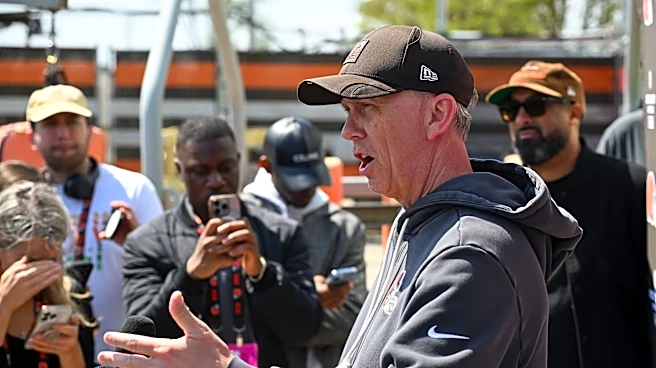
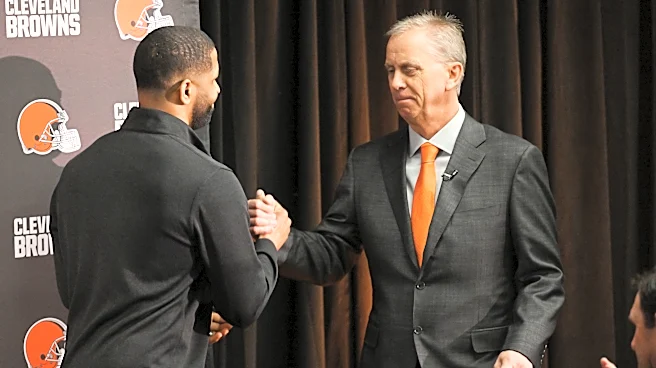
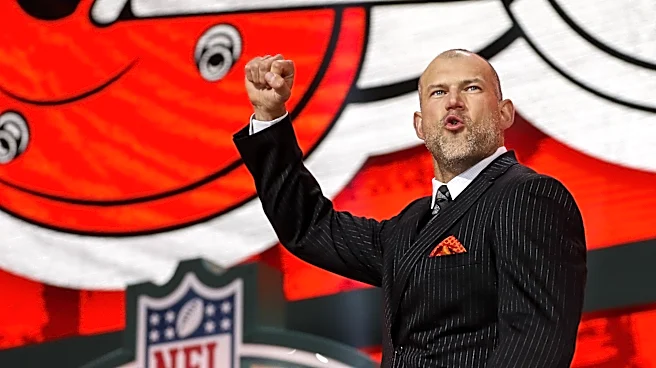
The Cleveland Browns have announced their decision to keep four quarterbacks on their roster following the selection of Taylen Green in the sixth round of the NFL draft. General Manager Andrew Berry confirmed that Green, known for his size and athleticism,
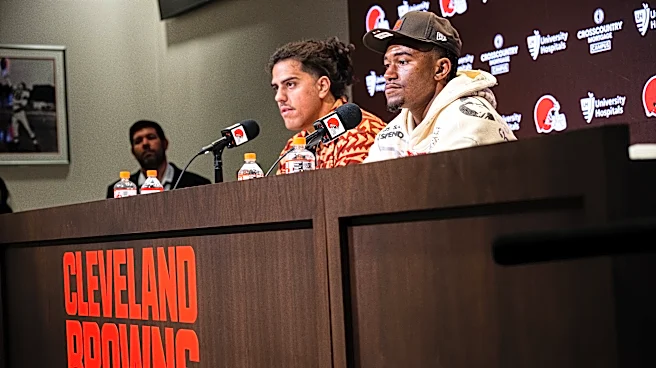
will remain in the quarterback position despite speculation about a potential switch to receiver or tight end. This decision comes a year after the team drafted Shedeur Sanders and Dillon Gabriel, who, along with Deshaun Watson, are also part of the current quarterback lineup. Berry stated that the team plans to maintain all four quarterbacks through the offseason, with the possibility of having three on the active roster and one on the practice squad during the regular season.
Why It's Important?
The Browns' decision to retain four quarterbacks highlights their strategic approach to building a robust and flexible roster. This move could provide the team with depth and options at the quarterback position, which is crucial given the physical demands and injury risks associated with the role. By keeping multiple quarterbacks, the Browns can ensure they have a backup plan in place, which could be vital for maintaining competitive performance throughout the season. Additionally, this strategy might influence other teams' roster decisions, as they observe how the Browns manage their quarterback lineup. The decision also underscores the importance of adaptability in player roles, as the team evaluates the best fit for each player's skills.
What's Next?
The Browns will need to navigate the complexities of roster management as they approach the regular season. They face the challenge of ensuring that their quarterbacks, particularly those not on the active roster, clear waivers if placed on the practice squad. This situation could lead to strategic decisions about which players to prioritize for active roster spots. Additionally, the team will monitor developments across the league that might impact their quarterback room, such as injuries or trades involving other teams. The Browns' approach to managing their quarterbacks could set a precedent for how other NFL teams handle similar situations.