


What's Happening?
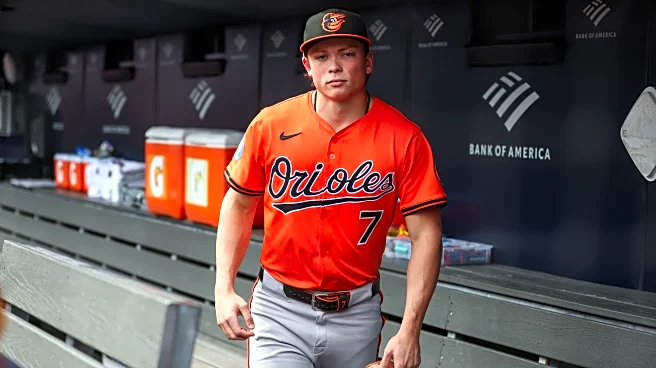
Joe Singley, at just 28 years old, has become an integral part of the Baltimore Orioles' coaching staff as the field coordinator and catching coach. Despite his young age, Singley has been tasked with organizing the Orioles' daily Spring Training schedule,
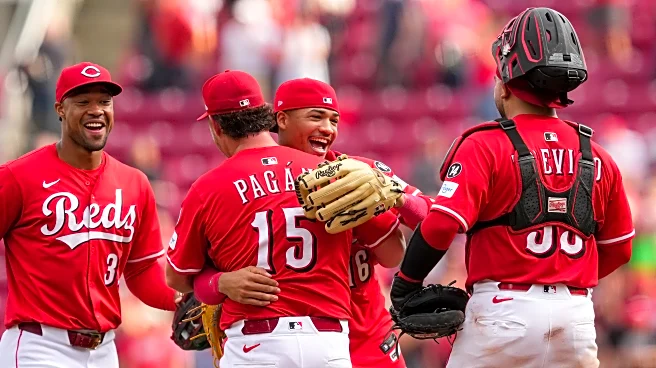
which includes workouts, drills, and player obligations. His journey to this position was marked by his time as a catcher at Indian River State College and Coastal Carolina University, where injuries prevented him from playing but allowed him to gain valuable knowledge of the game. Singley previously worked with the Cincinnati Reds and Miami Marlins before joining the Orioles under new manager Craig Albernaz, who praised Singley's coaching abilities and his capacity to connect with players.
Why It's Important?
Singley's appointment as a coach at such a young age highlights a shift in the sports industry towards valuing knowledge and coaching ability over experience alone. His role is crucial in shaping the Orioles' training and development strategies, particularly for catchers like Adley Rutschman and Samuel Basallo, who are considered among the best in the game. This development could influence other teams to consider younger, knowledgeable coaches who can bring fresh perspectives and innovative approaches to player development. The Orioles' decision to hire Singley reflects a broader trend in sports management that prioritizes adaptability and effective communication skills.
What's Next?
As Singley continues to work with the Orioles, his impact on the team's catchers and overall training regimen will be closely monitored. The success of his coaching strategies could lead to further opportunities within the organization or attract attention from other teams seeking to revamp their coaching staff. Additionally, Singley's approach may inspire other young coaches to pursue similar roles, potentially leading to a more dynamic and diverse coaching landscape in Major League Baseball.
Beyond the Headlines
Singley's rise in the coaching ranks underscores the importance of resilience and adaptability in professional sports. Despite setbacks during his playing career, Singley leveraged his understanding of the game to transition into coaching, demonstrating that non-traditional paths can lead to success. His story may encourage aspiring coaches and players to focus on developing their skills and knowledge, regardless of their playing status, and highlight the value of mentorship and collaboration in sports.