

What's Happening?
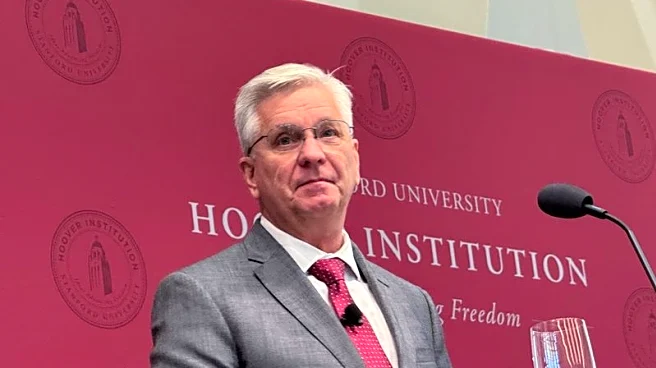
Claudia Sahm, a prominent economist known for the Sahm Rule recession indicator, has expressed concerns about a potential slow-moving crisis in the job market due to artificial intelligence (AI). While a recent report by Citrini Research suggested a rapid
AI-induced recession with unemployment rates soaring above 10%, Sahm believes a more gradual displacement of workers by AI could pose a greater threat. She argues that a slow-moving crisis might delay government intervention, unlike a rapid downturn which would likely prompt immediate fiscal and monetary responses. Sahm's concerns come amid a backdrop of weakening hiring trends and increasing layoffs in the U.S. labor market.
Why It's Important?
The potential for AI to disrupt the job market has significant implications for U.S. economic stability and workforce dynamics. A slow-moving crisis could lead to prolonged economic pain, as policymakers might hesitate to implement stimulus measures. This scenario could affect millions of workers, particularly in white-collar jobs, and challenge existing social safety nets. The broader impact on consumer spending and economic growth could be substantial, affecting industries reliant on a stable labor market. Sahm's warning highlights the need for proactive policy measures to address the evolving role of AI in the economy.
What's Next?
As AI continues to integrate into various sectors, the U.S. government and businesses may need to consider strategies to mitigate potential job losses. This could include retraining programs, adjustments to tax policies, and investments in sectors less susceptible to automation. Policymakers might also explore ways to balance technological advancement with job preservation. The ongoing debate about AI's impact on employment is likely to intensify, prompting further research and policy discussions.