





What's Happening?
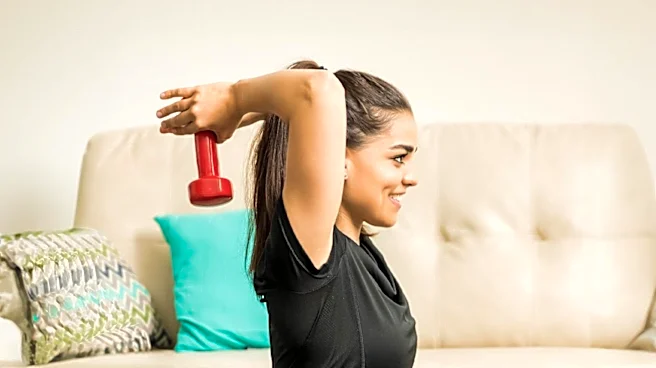
A recent study conducted by Edith Cowan University (ECU) reveals that building muscle does not require intense workouts or post-exercise soreness. The research emphasizes the effectiveness of eccentric exercises, which focus on the muscle-lengthening
phase of movements, such as lowering a dumbbell or descending stairs. These exercises allow muscles to produce greater force with less energy, making them a more efficient way to gain strength. Professor Ken Nosaka, Director of Exercise and Sports Science at ECU, advocates for this approach, noting that it offers significant benefits with minimal effort. The study suggests that incorporating simple eccentric exercises like chair squats, heel drops, and wall push-ups into daily routines can lead to meaningful improvements in strength and overall health, even with just five minutes of practice per day.
Why It's Important?
The findings from ECU challenge the traditional notion that effective muscle building requires exhaustive workouts and discomfort. This new approach could have significant implications for various demographics, particularly older adults and individuals with chronic health conditions, who may find traditional exercise regimens challenging. By reducing the physical strain associated with exercise, eccentric movements offer a more accessible and sustainable option for maintaining and improving muscle strength. This could lead to broader adoption of exercise routines among populations that typically face barriers to physical activity, ultimately contributing to better public health outcomes and reduced healthcare costs associated with sedentary lifestyles.
What's Next?
As awareness of the benefits of eccentric exercises grows, fitness professionals and healthcare providers may begin to incorporate these movements into their recommendations for clients and patients. This shift could also influence the design of exercise programs and equipment, focusing more on the muscle-lengthening phase of movements. Additionally, further research may explore the long-term effects of eccentric exercises on various health metrics, potentially leading to new guidelines for physical activity that prioritize efficiency and accessibility.
Beyond the Headlines
The promotion of eccentric exercises could also spark a cultural shift in how society views fitness and exercise. By moving away from the 'no pain, no gain' mentality, there may be a greater emphasis on sustainable and enjoyable physical activity. This could encourage more people to engage in regular exercise, improving overall public health and well-being. Furthermore, the simplicity and accessibility of these exercises could democratize fitness, making it more inclusive for individuals of all ages and abilities.