






What's Happening?
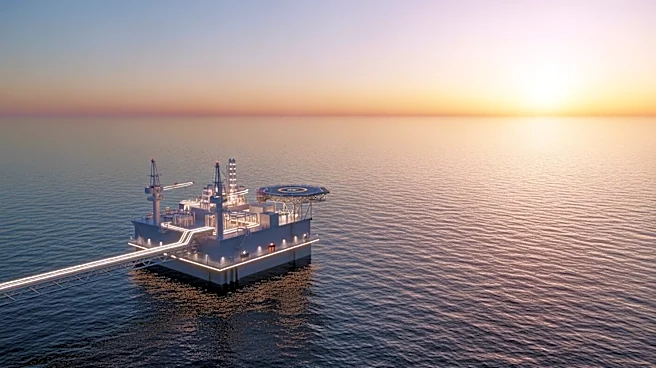
Delfin Midstream has announced the approval of Delfin FLNG 1, marking the first floating liquefied natural gas (LNG) project in the United States and the largest of its kind globally. Positioned off the coast of Louisiana, the project is expected to export
4.4 million tonnes of LNG annually. This initiative is part of a larger plan to achieve a total capacity of 13.2 million tonnes per annum (MTPA) through multiple floating LNG units. The project has secured investments from Mitsui O.S.K., Global Infrastructure Partners, and Vitol. The design, developed in collaboration with Samsung Heavy Industries, features gas turbine-driven technology and air-cooling systems, with an emphasis on using renewable electric power to minimize emissions. The FLNG vessel is designed to be mobile, allowing it to be relocated in the event of severe weather conditions.
Why It's Important?
The approval of Delfin FLNG 1 represents a significant advancement in the U.S. energy sector, particularly in LNG production and export. By utilizing floating LNG technology, the project reduces the need for extensive onshore infrastructure, potentially lowering costs and accelerating deployment. This development could enhance the U.S.'s position in the global LNG market, providing a competitive edge in energy exports. The involvement of major investors like Global Infrastructure Partners and Mitsui O.S.K. underscores the project's economic potential and the growing interest in sustainable energy solutions. Additionally, the project's focus on reducing emissions aligns with broader environmental goals, potentially setting a precedent for future energy projects.
What's Next?
The Delfin FLNG 1 project is expected to commence operations by 2030. As the first phase progresses, Delfin Midstream plans to secure financial investment decisions for additional FLNG vessels to expand its capacity. The project's success could lead to increased interest and investment in similar floating LNG technologies, influencing future energy infrastructure developments. Stakeholders, including energy companies and environmental groups, will likely monitor the project's impact on the LNG market and its environmental footprint.