






What's Happening?
Arm Holdings experienced a decline in its stock value despite reporting a strong fiscal fourth quarter for 2026. The company announced a 20% year-over-year increase in revenue, reaching $1.49 billion, surpassing analyst expectations. Non-GAAP earnings
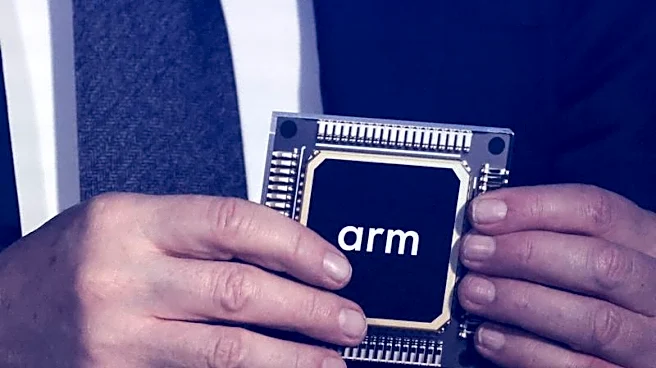
per share also exceeded forecasts, rising to 60 cents. However, Arm's stock fell by approximately 6% in after-hours trading, reversing some of the gains made during the regular session. This decline is attributed to the stock's previous run-up and the broader trend in the semiconductor sector, where elevated valuations have raised concerns about sustainability. Arm's success is largely driven by its data center CPU business, which has seen increased demand due to the AI adoption cycle. The company has positioned itself as a key player in the CPU market, with its architecture being widely used by major hyperscalers.
Why It's Important?
The performance of Arm Holdings is significant as it highlights the evolving dynamics in the semiconductor industry, particularly in the CPU market. The company's ability to exceed revenue and earnings expectations underscores the growing demand for CPUs in AI applications. This shift from GPU-centric to CPU-inclusive architectures reflects broader changes in AI workloads, which now require more balanced computing resources. Arm's strategic positioning in this market could influence the competitive landscape, challenging traditional CPU leaders like AMD and Intel. The stock's decline, despite strong financial results, suggests investor caution regarding high valuations in the tech sector, which could impact investment strategies and market confidence.
What's Next?
Looking ahead, Arm Holdings plans to continue capitalizing on the demand for its CPUs, particularly in AI-driven data centers. The company has projected significant growth in its CPU server market, expecting it to reach over $120 billion by 2030. However, Arm faces challenges in managing supply chain constraints to meet this demand. The company's ability to navigate these challenges will be crucial in maintaining its market position and achieving its growth targets. Additionally, Arm's development of its own in-house data center CPU could further strengthen its market presence, provided it can effectively manage production and distribution.
Beyond the Headlines
The rise of Arm-based CPUs in AI applications could have broader implications for the tech industry, potentially leading to shifts in market share among major semiconductor companies. As AI workloads evolve, the demand for efficient and high-performance CPUs is likely to increase, driving innovation and competition. Arm's success in this area could also influence the design and development of future AI systems, promoting a more diverse and competitive ecosystem. Furthermore, the company's focus on licensing and royalties as a business model may offer a sustainable revenue stream, even as it ventures into manufacturing its own chips.