





What's Happening?
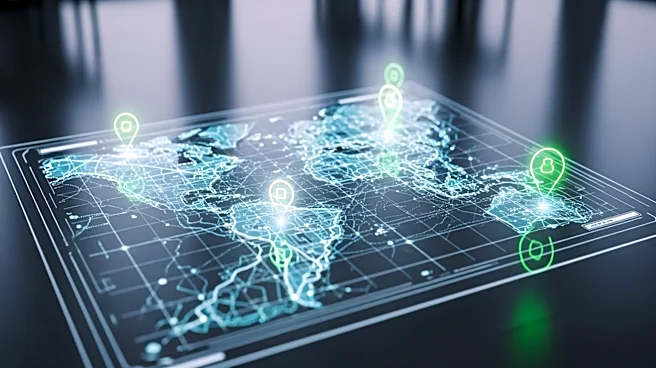
Tilebox has announced a significant update aimed at improving the effectiveness of AI agents in geospatial data analysis. The update addresses the common issue of AI systems being perceived as 'black boxes' by providing human analysts with a clearer understanding
of how AI workflows arrive at their results. This development is intended to make Earth Observation (EO) data more accessible to non-technical analysts. Tilebox's cofounder, Laura Costa, emphasized the importance of context in AI-generated answers, allowing users to trace the data and steps involved in reaching conclusions. The update, known as Tilebox 2.0, is designed to facilitate the use of AI in handling large quantities of disconnected satellite data, enhancing the collaboration between AI and human analysts.
Why It's Important?
The update is crucial as it addresses two major trends in the geospatial intelligence market: the increasing reliance on AI and the need to integrate multiple, disconnected data sources. By providing a system that allows AI to work more effectively with human analysts, Tilebox aims to improve the reliability and traceability of AI-generated insights. This development could significantly impact industries that depend on geospatial data, such as environmental monitoring, urban planning, and defense. By ensuring that AI tools can provide verifiable and accurate results, Tilebox is helping to build trust in AI systems and their applications in critical sectors.
What's Next?
With the new update, Tilebox plans to support developers in building applications where AI can utilize multiple data sources to generate advanced insights. The company aims to ensure that AI agents can provide proof of their analytical processes, reducing the risk of errors and enhancing the credibility of AI-driven conclusions. This approach is expected to attract more teams looking for comprehensive solutions that go beyond simple image acquisition, focusing instead on delivering actionable insights and workflows.